


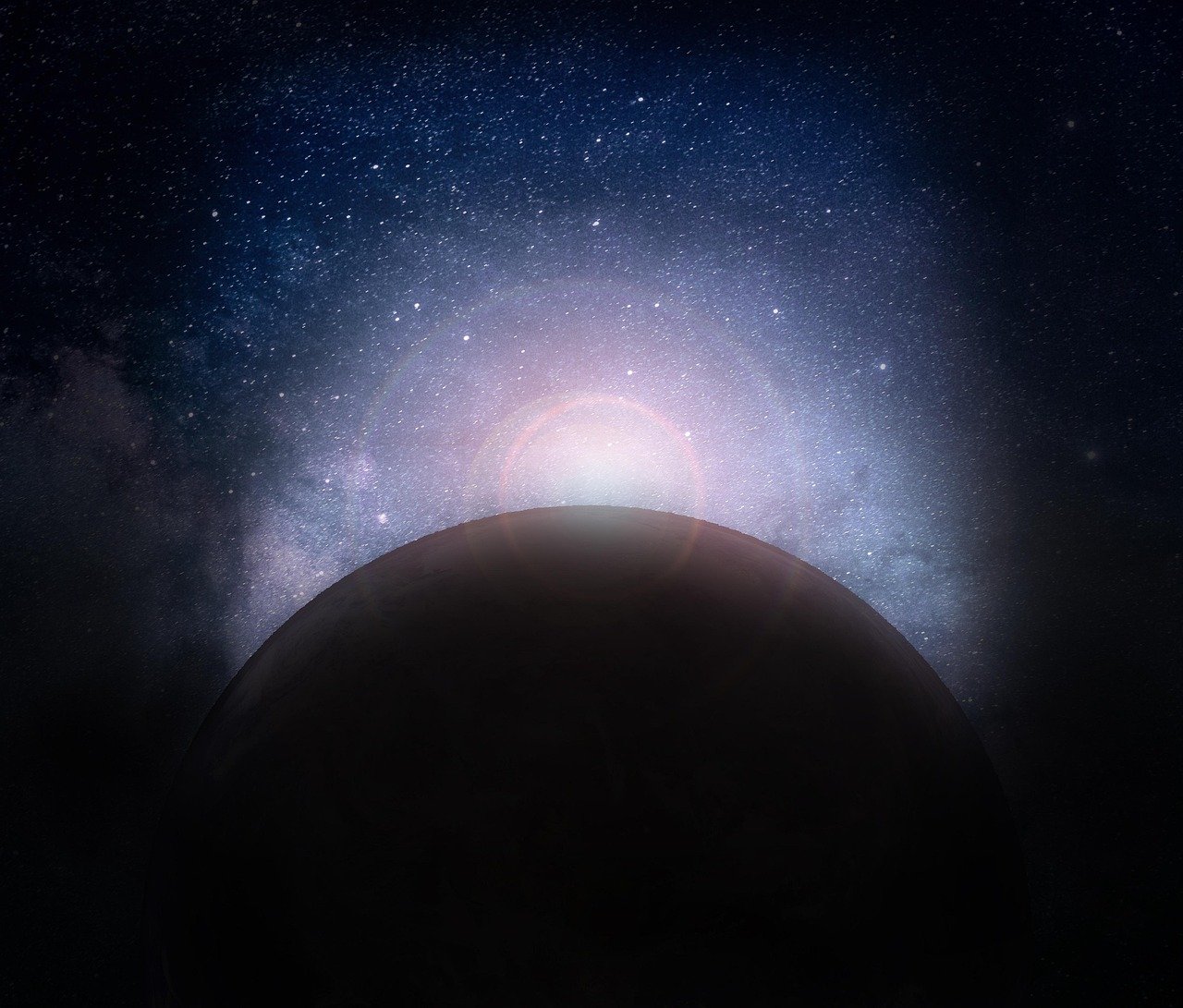
A Solar Eclipse, Not a Gravitational Catastrophe
In recent months, a peculiar rumor has been spreading rapidly on social media platforms like TikTok, Instagram, and X. The conspiracy theory claimed that Earth would experience a collapse of its gravitational field for 7 seconds on August 12, 2026, coinciding with a total solar eclipse. To give it a sci-fi thriller tone, the story mentioned a supposed secret NASA program called "Project Anchor".
The fake leaked document, which began circulating in late 2025 from an account dedicated to publishing AI-generated fictional stories, predicted between 40 and 60 million global victims. It claimed that people and objects would float into the air before abruptly falling. Faced with the avalanche of misinformation, NASA had to officially debunk the hoax.
What Did NASA Say?
A spokesperson for the U.S. space agency was blunt: "The Earth will not lose gravity on August 12, 2026. Earth's gravity, or total gravitational force, is determined by its mass. The only way Earth could lose gravity would be if the Earth system—the combined mass of its core, mantle, crust, oceans, land water, and atmosphere—lost mass."
Space authorities emphasized that a total solar eclipse has no unusual impact on Earth's gravity. The gravitational pull of the Sun and Moon only affects tidal forces, a well-known and predictable phenomenon that can be calculated decades in advance.
The Real Astronomical Context
On August 12, 2026, a real and safe total solar eclipse did occur. It was visible in a narrow path crossing Greenland, Iceland, the far north of Russia, the Atlantic Ocean, Spain, and northeastern Portugal.
For the curious, a solar eclipse happens when the Moon passes between Earth and the Sun, blocking its light. Although ancient cultures interpreted it as an omen, we now know it is a beautiful geometric alignment. It was not visible from Argentina, but the next annular solar eclipse in Patagonia will be on February 6, 2027.
Real Precaution: How to Safely Observe an Eclipse
Although there is no risk of floating in the air, looking directly at the Sun without proper protection can cause severe and permanent eye damage. NASA recommends using solar viewers that meet the international standard ISO 12312-2. Regular sunglasses, no matter how dark, are not safe and are dangerous.