


The Tweet That Sparked Debate
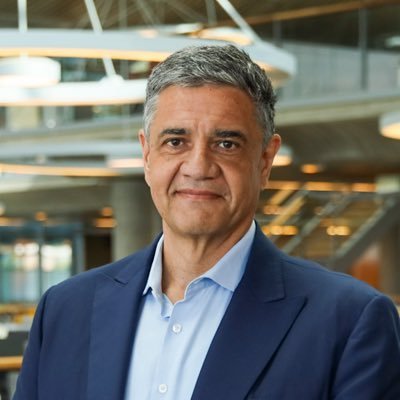
On August 12, 2026, the head of government of the Autonomous City of Buenos Aires (CABA), Jorge Macri, took to his official X account to announce the arrest of two individuals. His message was blunt: "This is what the control wall is for. These two criminals came from the conurbano to rob here. Now they won't bother anyone anymore. Law and order." The post, accompanied by a video of the operation, quickly went viral, amassing thousands of views and reactions within hours.
The statement refers to the Preventive Control of Documentation and Interjurisdictional Traffic, commonly known as the "control wall" – a system of checkpoints at the entrances to the city designed to prevent criminals from the surrounding metropolitan area (the conurbano) from entering.
What Is the 'Control Wall'?
The "control wall" is an operational strategy implemented by the Buenos Aires city government at key road access points. It involves the presence of City Police officers and facial recognition cameras to verify drivers' documentation and detect outstanding warrants or criminal records before vehicles enter the district. According to official data, this system has already led to the arrest of dozens of individuals with pending arrest orders. In this case, the two intercepted suspects had prior records and were reportedly heading to commit a robbery, according to Macri's version.
The term "conurbano" refers to the densely populated suburbs surrounding the city of Buenos Aires, often associated with higher crime rates and social inequality. The city and the province of Buenos Aires have separate police forces and jurisdictions, which has historically created coordination challenges.
Reactions and Criticism
The publication did not take long to generate mixed responses. While some users celebrated the measure and backed the head of government, others questioned its effectiveness. User Nicolás Blanco replied: "Jorge Macri: The 'wall', as you call the Preventive Control of Documentation and Interjurisdictional Traffic, is actually quite a smoke screen. At night there is minimal deployment, and this week, a few blocks from that bridge (Alberdi and General Paz), the..." (the message was cut off).
Meanwhile, the account HAGOV Conurbano launched an irony: "But don't get discouraged, fellow countryman, the biggest thief in history who came from the conurbano and went to rob the capital is you, Don Jorge, and that's why the Doke kids admire you so much", referencing the political history of the Macri family.
Another user, Mûriëlo, pointed at the governor of Buenos Aires province: "Everything is the fault of that son of a bitch @Kicillofok. You should charge him even for stopping his thieves", reflecting the political tension between the national government, the province, and the city.
Political Context
The debate over security at the CABA–province border is a recurring issue. The city government insists that the interjurisdictional control is an effective tool, while critics from the conurbano accuse it of being a symbolic "wall" that does not address the root problem. The tweet from Macri comes at a time of high social sensitivity regarding insecurity, and the arrest of these two criminals is presented as a concrete achievement of his administration. However, critics point out that the operation is not constant and that criminals continue to find alternative entry points.
As of the close of this report, the city government had not issued an additional official statement about the case, but more details about the identity of the detainees and the procedure are expected in the coming hours.