


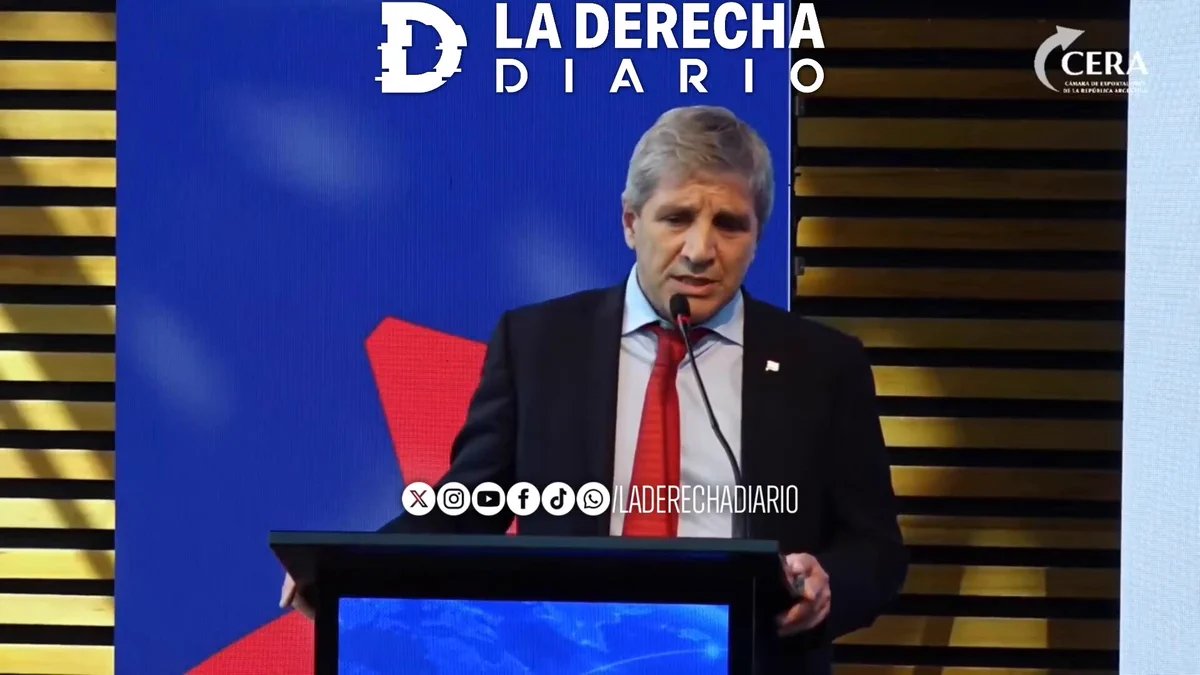
A New Horizon for the Argentine Economy
The Minister of Economy, Luis Caputo, has emphasized the approach implemented by Javier Milei's administration, describing it as a "Copernican revolution" compared to the economic policies of the past.
Context for International Readers: What is a "Copernican Shift"?
In this political and economic context, the term refers to a radical transformation of perspective. For decades, Argentina often dealt with crises through aggressive state intervention and price controls. The current model proposes a complete 180-degree turn, betting on liberalization, deregulation, and legal certainty to attract global capital.
🚀 The Current Strategy
- ✅ Respect for Private Property: A strict policy of zero expropriations.
- ✅ Crisis Prevention: Managing the inherited economic burden without systemic collapse.
- ✅ Legal Certainty: Creating ironclad guarantees for foreign investors and citizens.
📜 The Historical Contrast
According to Minister Caputo, the government has avoided repeating historical patterns where the State implemented measures that violated property rights during severe crises. He specifically cited the legacy of Kirchnerism (the political current led by Néstor and Cristina Kirchner), which was characterized by higher state interventionism.
Economic Management Pillars
| Dimension | Action Implemented | Expected Goal |
|---|---|---|
| Private Property | Zero Expropriations | Attract foreign investment |
| Stability | Fiscal Adjustment | Prevent hyperinflation |
| Legal Rights | Legal Certainty | Trust in the judicial system |
This information is based on official statements from the Ministry of Economy. For more detailed data, you may visit the official website of the Ministry of Economy of the Nation.