


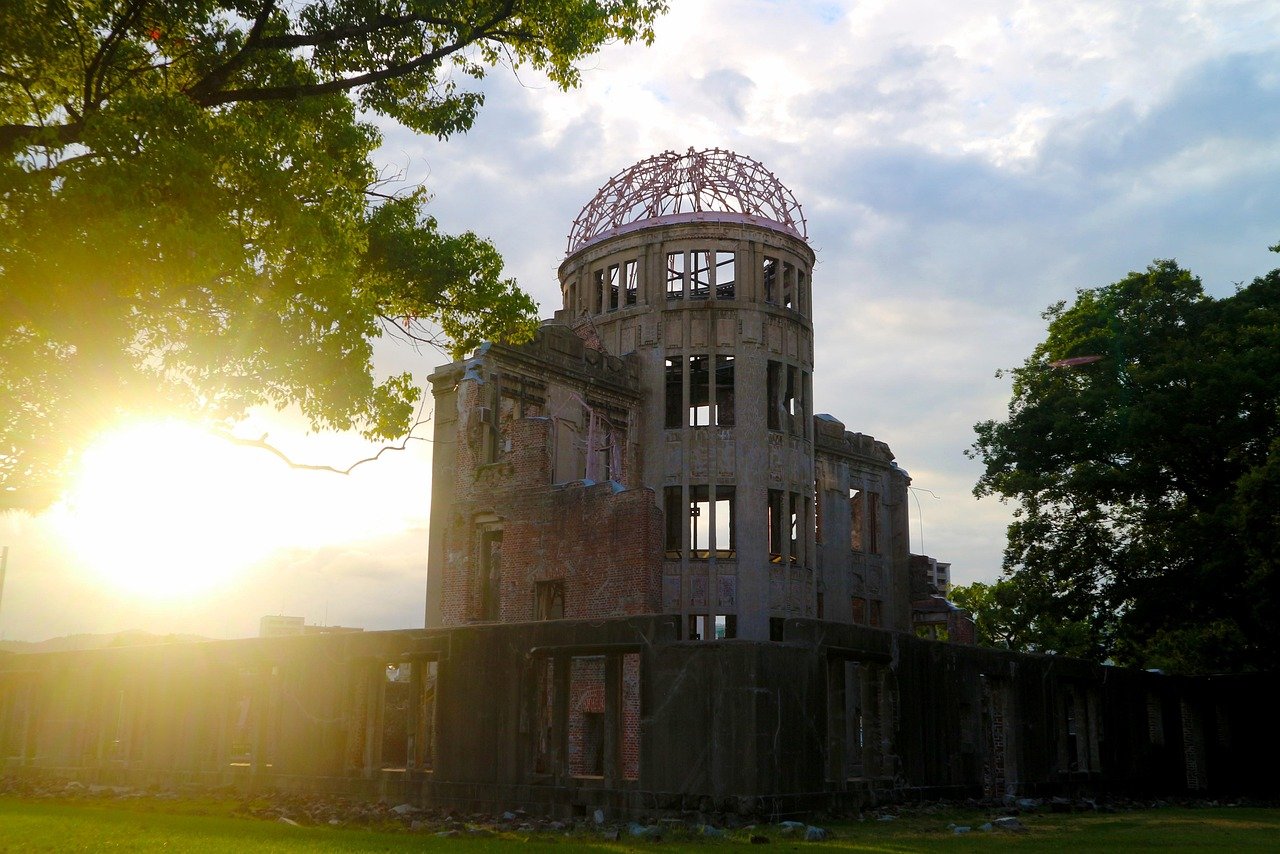
An Anniversary Marked by Memory and Controversy
On August 6 and 9, 2026, the world remembered the 81st anniversary of the atomic bombings of Hiroshima and Nagasaki, the only nuclear attacks in history against a civilian population. The ceremonies, which this year saw the participation of nearly 50,000 people in Hiroshima and representatives from over 120 countries, were tinged by an intense internal debate in Japan regarding its future nuclear defense policy.
On August 6, at 8:15 am (local time), the exact moment the US bomber Enola Gay dropped the uranium bomb Little Boy on Hiroshima, a minute of silence was observed. The city's mayor, Kazumi Matsui, once again questioned the validity of nuclear deterrence as a security guarantee. August 9 was Nagasaki's turn, where the plutonium bomb Fat Man caused similar devastation.
- Hiroshima: around 140,000 deaths by the end of 1945 (at least 80,000 instantly).
- Nagasaki: about 40,000 deaths in the initial detonation, exceeding 100,000 in the following five years.
- Most victims died from burns, injuries, and acute radiation syndrome.
The Political Shift: A Revision of the 'Three Non-Nuclear Principles'?
The anniversary coincides with a moment of profound reflection in Tokyo. Prime Minister Sanae Takaichi avoided making a clear statement about the country's anti-nuclear commitment, while Defense Minister Shinjiro Koizumi called for a 'dialogue without taboos' on the issue. This ambiguity caused concern both in Japanese society and among the hibakusha (the surviving victims of the atomic bombs).
According to media outlets like NHK and Asahi Shimbun, a senior government official suggested in an informal meeting that Japan should consider the possibility of possessing nuclear weapons, sparking public outrage. The debate centers on the possible revision of the 'Three Non-Nuclear Principles' (not possessing, not producing, and not permitting the introduction of nuclear weapons into Japanese territory), in place since 1967. Hirofumi Yoshimura, leader of the Japan Innovation Party, opened the door to debating the principle that prohibits 'permitting their introduction', within the framework of the alliance with the United States.
Beijing, for its part, accused Tokyo of 'new militarism', in a context of growing regional tensions and Chinese military movements. The pressure to strengthen deterrence against China collides with the historical memory of a country that suffered the nuclear horror firsthand.
The Testimony of Philip Morrison: 'We never thought about not dropping it'
In this context, the testimony of American physicist Philip Morrison resurfaces. He played a key role in the Manhattan Project (the US research program that developed the first atomic bombs) and helped assemble the Fat Man bomb on the island of Tinian. In a 1975 interview with the BBC, Morrison reflected on the moral dilemma of the scientists: 'It was not for lack of concern for humanity, but because of that concern. Perhaps that was the sin'.
Morrison, who carried the plutonium core in his lap en route to the Trinity test on July 16, 1945, led a group of young physicists who advocated for a public demonstration of the bomb before its use in Japan. However, he admitted: 'I never thought of abandoning the project', and revealed that further bombings were planned for a year if necessary. 'We knew the effects intellectually, but the difference between the numbers and seeing the living reality of death is enormous. We knew it, but we didn't feel it', he confessed.
Morrison believed that President Franklin D. Roosevelt, who died in April 1945, was the only person with the prestige to halt the nuclear momentum, and that the decision to drop two consecutive bombs 'marked' his successor, Harry S. Truman, who only learned of the project upon taking office.
Nihon Hidankyō: 70 Years of Struggle for Nuclear Abolition
In parallel, the Japan Confederation of A- and H-Bomb Sufferers Organizations (Nihon Hidankyō), awarded the Nobel Peace Prize in 2024, celebrated its 70th anniversary on August 10, 2026. The organization, the only national one representing the hibakusha, unifies survivors under the premise of 'saving humanity from crisis through their experiences'.
The story of Iwasa Mikisō, who passed away in 2020 at the age of 91, exemplifies the spirit of the struggle. At 16, Iwasa survived the Hiroshima bombing 1.2 kilometers from the hypocenter, but lost his mother, trapped under rubble. 'Run away fast', she begged him before he escaped, promising to return soon. Days later, he had to cremate her body. This trauma drove him to dedicate his life to the cause: 'I don't want anyone to ever go through a death like my mother's or my sister's again'.
The organization faces an uncertain future: as of March 2026, only 91,000 survivors remained recognized, with an average age of 86.7 years. Satoshi Tanaka, an 82-year-old Hiroshima survivor, expressed his skepticism regarding the political shift: 'There is a lot of talk about national security. What about building peace through diplomacy?'
Keys to the Nuclear Debate in Japan
- • The Three Non-Nuclear Principles: in place since 1967, they prohibit possessing, producing, or permitting the introduction of nuclear weapons into Japan.
- • The US Nuclear Umbrella: Japan relies on US nuclear capability for its security, a paradox that generates an ethical and strategic dilemma.
- • Chinese Pressure: Beijing accuses Tokyo of 'new militarism' and regional tension fuels the debate on deterrence.
- • The Hibakusha Factor: the survivors, with an average age of 86.7, are the most influential voice of Japanese pacifism, but their numbers are rapidly declining.
Sources: BBC Mundo, La Nación, Infobae, Rebelión, Nippon.com