


The earth trembled again in southern Spain. On Tuesday, August 18, 2026, a new earthquake of magnitude 4.7 shook the province of Granada, in the autonomous community of Andalusia, causing alarm among the population and leaving three minor injuries, one of them a minor who was taken to a hospital.
The quake was recorded at 10:37 local time (08:37 GMT) and had its epicenter in the town of Gójar, about 10 kilometers south of the city of Granada, at a very shallow depth, according to Spain's National Geographic Institute (IGN). The agency initially corrected the magnitude from 4.6 to 4.7 after a more detailed analysis.
A Seismic Sequence That Gives No Respite
This tremor comes just three days after the 4.8 magnitude earthquake recorded on August 15 in the nearby town of Alhendín, which already caused material damage to some buildings. Since Friday, August 14, the area has been experiencing intense seismic activity with more than 150 tremors, according to IGN records.
After the main quake on Tuesday, several aftershocks occurred, including one of magnitude 4.2 at 11:34 with epicenter in Alhendín. The movement was felt with particular intensity in Granada and its metropolitan area, as well as in parts of the provinces of Almería, Jaén, and Málaga.
Damage and Evacuations
Emergency services received more than 500 calls reporting cracks in walls, falling debris, and other incidents. There were also a dozen requests for medical assistance, mainly for anxiety attacks. Images shared on social media showed debris scattered on streets, damaged vehicles, and facades with falling pieces.
As a preventive measure, authorities ordered the closure of all municipal buildings except essential services, as well as museums and sports facilities. The Granada metro reduced train speed to 30 km/h as a precaution. Several hotels were evacuated.
The Alhambra at the Center of Concern
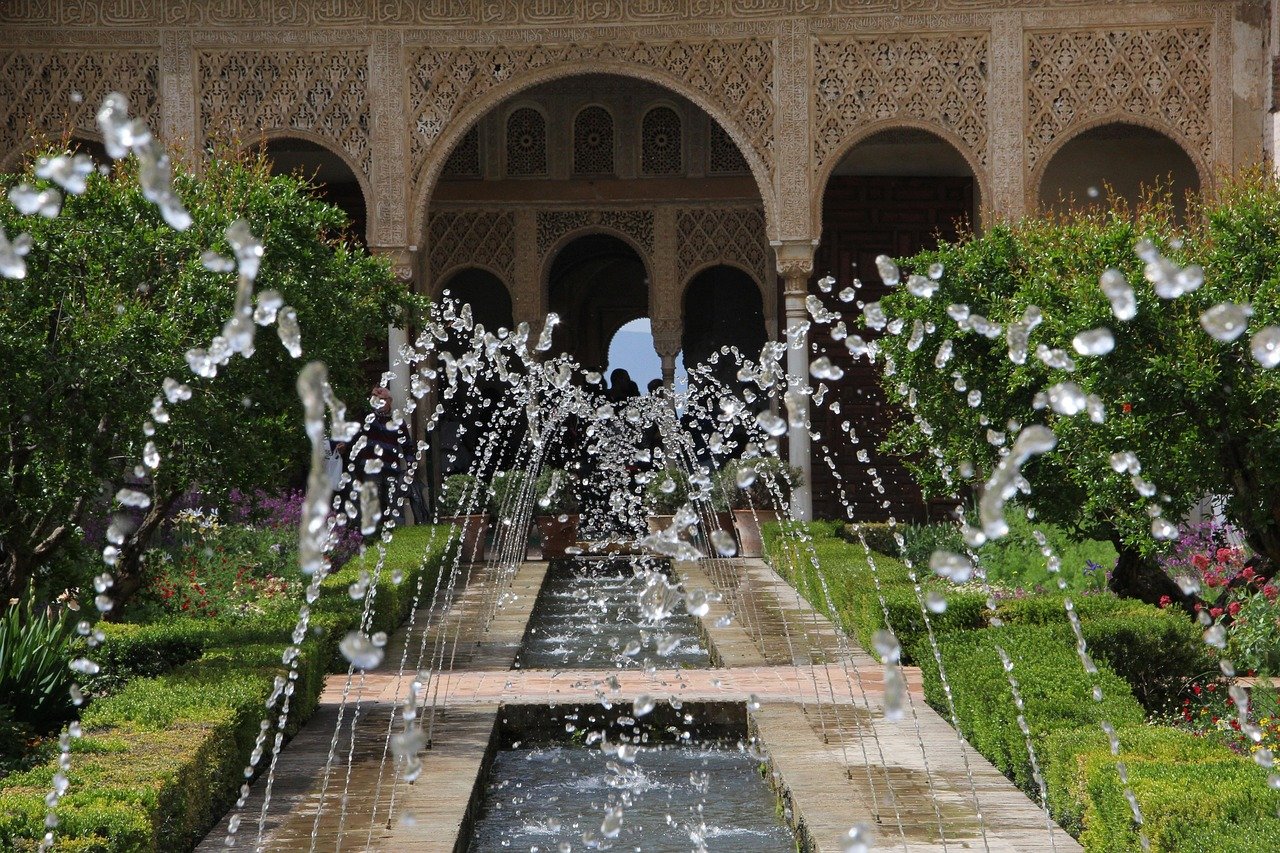
The Patronato de la Alhambra y el Generalife decided to evacuate the Nasrid Palaces and the Alcazaba preventively, temporarily interrupting visits to these areas. Access to the Partal Palace and the Generalife remained normal while a technical team assesses the condition of the monumental complex, declared a UNESCO World Heritage Site.
This protocol had already been applied after Friday's quake, when the monument closed its doors and reopened after a review that ruled out “significant incidents.” However, the constant seismic activity rekindles concern about the vulnerability of this iconic site.
A Monument Built on Geological Faults
According to the scientific study “Is there a relationship between seismicity, faults, cracks, and wall breaks in the Alhambra?”, the danger to the monument does not come only from surface vibration. The hill on which it sits is crossed by active geological faults—fractures in the ground whose rock blocks shift with earthquakes, transferring risk directly to the foundations of the complex.
The main structural risk is concentrated on the northern slope of the complex, between the Tajo de San Pedro and the Fuente del Avellano, an area crossed by these underground cracks. Historical scars on the walls follow the same northwest-southeast orientation as the ground faults. Additionally, water erosion aggravates the problem: the cracks act as natural conduits through which rainwater seeps, wearing away the rocky matrix of the hill.
The delicate plaster filigrees, tilework, and muqarnas vaults of Nasrid art do not have modern supports; they are fixed with ancient anchors on clay walls. Horizontal vibrations can cause micro-fractures, dislodge tiles, or cause decorative pieces to fall. The slender marble columns of the Court of the Lions, although they support vertical weight well, are vulnerable to lateral sway during an earthquake.
A Seismic History That Goes Back Far
The Alhambra has a long history of earthquake damage. The most serious precedent dates back to July 1431, when a destructive seismic series (estimated intensity between IX and X) caused entire sections of the Nasrid walls to collapse and reduced the Palace of the Alijares to ruins. That episode even forced the Christian troops of King John II of Castile to lift the siege after the Battle of La Higueruela.
Later, earthquakes in 1522, 1526, and 1778 again tested the structures. In 1778, an earthquake caused a section of the wall to detach at the Tajo de San Pedro, right over one of the faults. In the 19th and 20th centuries, episodes such as those of 1884, 1956, and 1984 continued to reactivate micro-displacements in these underground fractures.
Authorities Ask for “Maximum Prudence”
The president of the Junta de Andalucía, Juan Manuel Moreno Bonilla, asked the population to act with “maximum prudence” and follow the recommendations of the authorities. He warned that, according to experts, seismic movements and aftershocks could continue in the area. The Andalusian authorities have kept the emergency phase for seismic risk activated since August 15.
Granada is consolidating as one of the provinces in Spain with the highest seismic risk, keeping its population in a state of constant alert. For now, no fatalities have been reported, but the situation remains closely monitored by emergency services and geologists.