


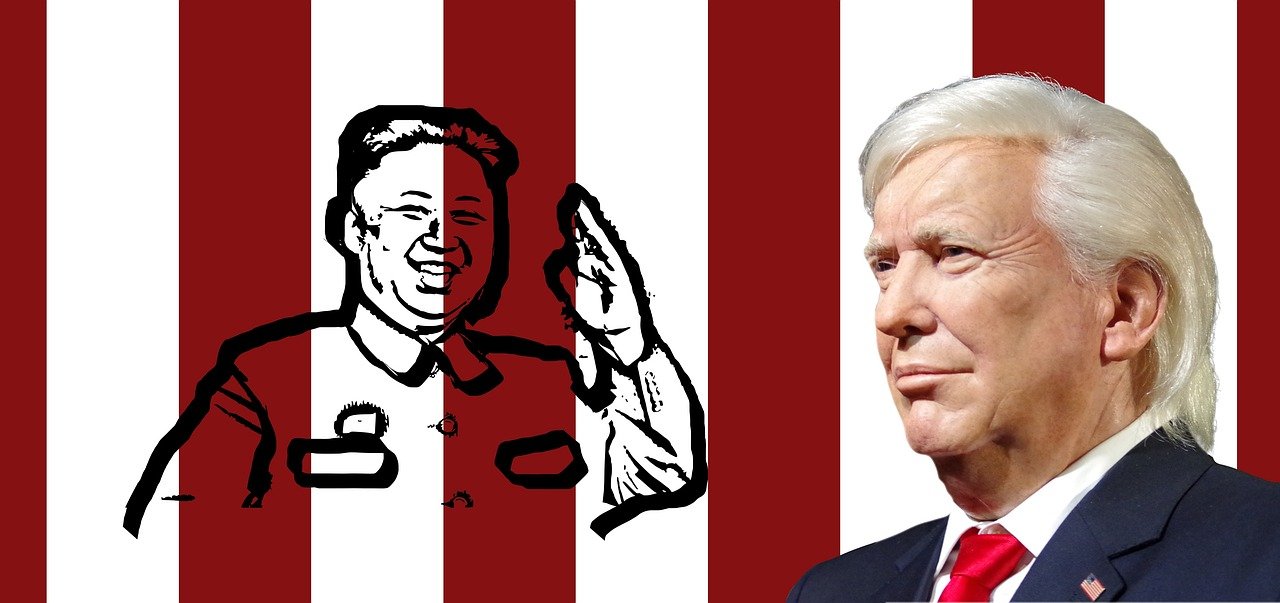
A New Chapter in Trump-Kim Relations
US President Donald Trump confirmed on Wednesday, August 19, 2026, that he will hold a meeting with North Korean leader Kim Jong-un before the end of the year. The statement was made during a tour of ongoing construction at the White House, where Trump responded affirmatively to a reporter's question.
“Yes, I will meet with him,” the president said, adding that North Korea has 57 “very powerful” nuclear weapons. “This should never have been allowed to happen. If I had been president, I wouldn't have allowed it. But they have them,” he said, while noting that he gets along “very well” with the North Korean leader.
Why Now?
Trump's move comes amid a stalemate in the war against Iran and frustration with long-time allies like South Korea, which he accuses of not supporting him enough in the conflict over the Strait of Hormuz. For the Republican president, the summits with Kim represented the glory moments of his foreign policy in his first term (2017-2021), and he seeks to repeat that feeling of prominence.
The American newspaper noted that Trump is “pressing his advisors” to schedule the meeting, and that he seeks “a foreign policy achievement to boast about, given that victory in Iran remains elusive.”
Reduced Military Exercises: The Move That Angered Seoul
The confirmation of the summit comes days after Trump ordered reduced joint military exercises with South Korea, which began on August 17 and were supposed to last until the 27th, but will end early on August 21. This is the first time that maneuvers of this magnitude have been shortened at the request of the United States once they have started.
The president justified the measure on his platform Truth Social: the exercises “send a totally inappropriate and hostile signal” toward North Korea, a country he called “respectful” and “non-threatening” since he returned to power in 2025. The decision surprised the South Korean government, which will only complete the defensive phase of the drills, leaving out the counteroffensive.
South Korean Foreign Minister Cho Hyun said the order seeks three objectives: to force Seoul to address Washington's demands, to send a signal to Pyongyang, and to break the stalemate in the Iranian conflict. The United States maintains about 28,500 soldiers deployed in South Korea, although Trump mentioned a figure of 39,000.
North Korea's Response: Interest or Caution?
While Trump assures that exchanges with Kim are “very positive,” the North Korean leader's sister and a key regime figure, Kim Yo-jong, denied any knowledge of contact between the two leaders. In a statement released by the state agency KCNA, she said the bilateral relationship “remains excellent,” but did not confirm any recent conversation.
Pyongyang, which historically views military exercises as invasion rehearsals, responded on Wednesday by launching a ballistic missile over the Sea of Japan in protest. Additionally, the regime has strengthened ties with Russia and China since the failure of denuclearization negotiations, and has even sent soldiers to the war in Ukraine.
North Korea's Nuclear Arsenal: How Many Bombs Does It Have?
Trump's statements about 57 nuclear weapons coincide with expert estimates. The Stockholm International Peace Research Institute (SIPRI) calculated in June that North Korea “has possibly manufactured about 60 warheads and possesses enough fissile material to produce at least 30 more.” Other analyses indicate the country has material for up to 90 bombs.
A Precedent of Summits Without Results
Trump and Kim met three times during the Republican's first term: Singapore (2018), Hanoi (2019), and an impromptu meeting at the Demilitarized Zone between the two Koreas (2019). These were the only summits in history between a US president and a North Korean leader, but they produced no concrete denuclearization agreements.
Since then, Pyongyang has multiplied its production of nuclear weapons, which went from about 15-20 warheads a decade ago to the current 60, according to independent estimates. North Korea considers its nuclear program as its main guarantee of survival against external threats.
Reactions in the Region: China and Japan on Alert
Trump's announcement shakes the balances in Asia-Pacific. China, Pyongyang's main ally, is making its moves: Foreign Minister Wang Yi arrived in Seoul this week on his first bilateral visit to South Korea in five years. Japan, concerned about Trump's erratic policy, seeks to strengthen its military ties with Australia.
The South Korean government, for its part, is negotiating with Washington the implementation of a 350 billion dollar investment committed in last year's trade agreement, amid growing distrust toward its American ally.
In perspective: This would be the fourth summit between the two leaders. The last time Trump mentioned the possibility of a meeting was in 2025, during a tour of Asia, but the project came to nothing so as not to overshadow his meeting with Chinese President Xi Jinping. Now, the context is different: the war against Iran is stalled, oil is above 90 dollars a barrel, and Trump needs a diplomatic triumph to show off.