LATEST
US Schools Deploy Pepper Spray Drones to Halt Shootings in 15 Seconds Brazil Elections 2026: Lula Leads Bets, but Bolsonaro Tightens in Polls Amid Regional Tension Horror in France: Five Infant Bodies Found in Cardboard Boxes in Orange Shock in Bosnia: Medjugorje Marian Sanctuary Vandalized Days Before Major Youth Festival July 2026 Salary Payment Schedule for Public Employees in Argentina: Key Dates for 5 Provinces Rosario to Become the Capital of Agricultural Innovation with BCR Agtech Forum and Aapresid 2026 Milei vs. Lula: Argentina Downplays Diplomatic Crisis as Brazil Investigates São Paulo Visit Confidence in Milei's Government Plummets to 1.94 Points in July 2026: Core Support Erodes Georgieva Tours Vaca Muerta and Hints at Higher Dollar in Dinner with Business Leaders Keiko Fujimori Sworn In as Peru's First Female President, Unveils Ambitious Digital State Modernization US Schools Deploy Pepper Spray Drones to Halt Shootings in 15 Seconds Brazil Elections 2026: Lula Leads Bets, but Bolsonaro Tightens in Polls Amid Regional Tension Horror in France: Five Infant Bodies Found in Cardboard Boxes in Orange Shock in Bosnia: Medjugorje Marian Sanctuary Vandalized Days Before Major Youth Festival July 2026 Salary Payment Schedule for Public Employees in Argentina: Key Dates for 5 Provinces Rosario to Become the Capital of Agricultural Innovation with BCR Agtech Forum and Aapresid 2026 Milei vs. Lula: Argentina Downplays Diplomatic Crisis as Brazil Investigates São Paulo Visit Confidence in Milei's Government Plummets to 1.94 Points in July 2026: Core Support Erodes Georgieva Tours Vaca Muerta and Hints at Higher Dollar in Dinner with Business Leaders Keiko Fujimori Sworn In as Peru's First Female President, Unveils Ambitious Digital State Modernization
Español English 中文 Português Français Italiano Deutsch العربية Русский اردو

Hidden Oceans: Mini-Neptuns Could Be Harboring Secret Water Reserves

14/07/2026 04:34 - Otros
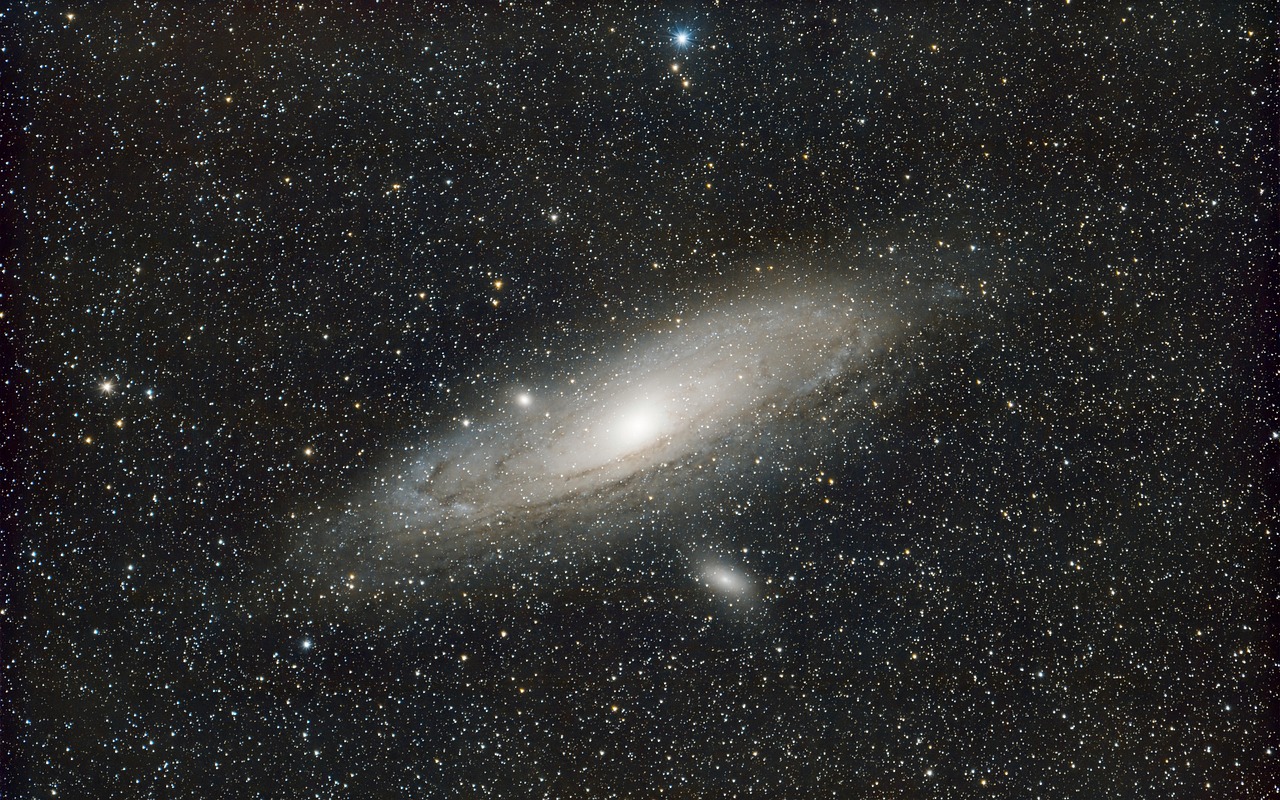
A Universe Full of Secrets Waiting to be Discovered

A study published in the journal The Astrophysical Journal and led by the University of Chicago suggests that mini-Neptuns could harbor vast water reserves in deep layers, completely invisible even to the powerful James Webb Space Telescope. This finding, revealed on July 13, 2026, opens an exciting horizon for understanding the composition of distant worlds and re-evaluates how we interpret cosmic data.

What are Mini-Neptuns?

Mini-Neptuns are the most common type of planet cataloged in the galaxy. They are celestial bodies slightly smaller than Neptune and have no equivalent in our solar system. Studying them is complex because, being a mix of rock, gas, and water, scientists must reconstruct their structure through advanced simulations combining observations, chemistry, physics, and planetary science.

The observation challenge: Most planets orbit distant stars, whose brightness dominates the scene. To overcome this, telescopes like James Webb analyze starlight as it passes through a planet's atmosphere, allowing the identification of molecules, but not resolving the deep interior of the celestial body.

The Case of TOI-270 d

The research team took TOI-270 d as a case study, a planet orbiting a star in the Pictor constellation. The James Webb Telescope had detected hydrogen, methane, and carbon dioxide in its atmosphere, molecules that, according to scientists, should be accompanied by abundant water.

However, postdoctoral researcher Caroline Piaulet-Ghorayeb, the study's lead author, stated that “it is very possible that these planets are hiding much more water than their atmospheres reveal.” The reason? In cold atmospheres or those with very abundant water, water can sink beneath hydrogen because the latter is lighter, remaining out of reach for telescopes that only read the upper layer.

Implications for Planetary Science

The study recalls that water does not always behave the same way; it can be frozen, gaseous, liquid, or as a supercritical fluid under extreme pressures. Although authors like co-author Eliza Kempton consider it unlikely that TOI-270 d is habitable due to its high pressures and temperatures, understanding the physics and chemistry of these planets is a fundamental and hopeful step.

Associate Professor Leslie Rogers highlighted that water is one of the most difficult molecules to identify due to its intermediate density. Still, every new discovery brings us a little closer to unraveling the mysteries of planetary formation and refining our tools for the future search for habitable worlds beyond our solar system.

Original source: Infobae

Today's News
Alfredo's Column Alfredo S. Quiroga

Alfredo S. Quiroga