


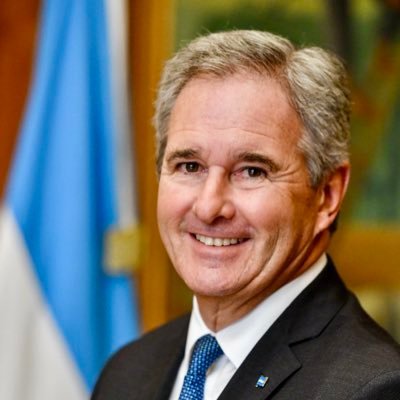
In a message posted on his X account (formerly Twitter) at 8:01 PM on August 13, 2026, Argentine Foreign Minister Pablo Quirno confirmed that Argentina has formally adhered to the Geneva Consensus Declaration. This international document reaffirms the protection of human life from conception and recognizes the family as the natural and fundamental unit of society.
“We join this coalition to bring leadership, diplomatic capacity, and regional projection to an agenda founded on human dignity and the sovereignty of nations,” wrote the chancellor, adding that this act “confirms the path set by President @JMilei: life, liberty, private property, and the rule of law guide this Government’s decisions.”
What is the Geneva Consensus?
The Geneva Consensus Declaration is an agreement promoted by the United States in 2018, during the administration of Donald Trump, aimed at uniting countries that defend conservative positions on health, family, and human rights. The text emphasizes that human life must be protected at all stages and that the family, based on marriage between a man and a woman, is the fundamental unit of society. It also defends each nation’s sovereignty to legislate on these matters without external interference.
Argentina’s adhesion comes within the framework of the foreign policy of Javier Milei’s government, which has prioritized alliances with countries sharing similar values and economic freedom. Quirno himself highlighted that Argentina seeks to “bring leadership” to the region, in a context where several Latin American countries have advanced legislation on abortion and gender diversity.
Mixed Reactions
The news sparked a wave of reactions on social media. While users and officials close to the ruling party celebrated the measure—such as journalist Ana Marmora, who expressed being “moved and proud that the family returns to the center of our politics”—other sectors harshly criticized it. The account @demarcation251 asked: “Are they going to repeal abortion or is it just nonsense?” while user Andrea Fab accused the Government of “hating retirees” and being “cynical, hypocritical, sellouts.”
So far, the Executive Branch has not issued an official statement beyond the chancellor’s tweet, and it is expected that in the coming days more details will be provided about the scope of this adhesion and whether it will imply changes in domestic policies.
International Context
The Geneva Consensus was originally signed by countries such as the United States, Brazil, Egypt, Hungary, Poland, and several African and Middle Eastern states. Argentina now joins this coalition, in a move that reinforces the alignment of Milei’s government with Western conservative powers.
The decision comes at a time of intense social debate in the country on gender issues and reproductive rights, and could have implications for Argentina’s diplomatic agenda before international organizations such as the UN.