


28/07/2026 09:11 - Internacionales
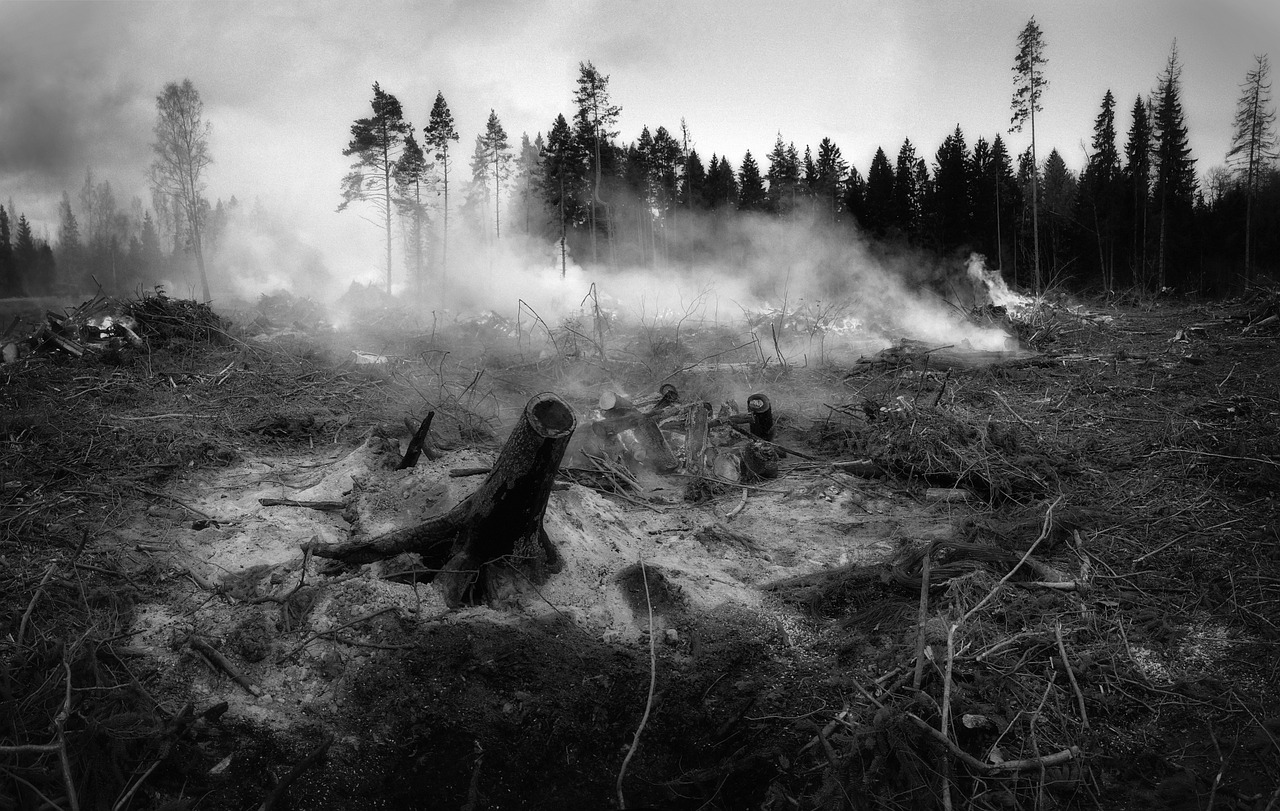
The boreal summer of 2026 will go down in history as Europe's climate turning point. The numbers are staggering: 254,000 hectares burned across the European Union, 350,000 people displaced, and a meteorological phenomenon never before seen on the continent that has generated its own storm weather.
French and Spanish authorities are working against the clock while the simultaneity of the fires overwhelms the EU's solidarity response system. French President Emmanuel Macron described the situation as the most serious since World War II.
In the Gironde department, near Bordeaux, the main fire has already devoured 42,000 hectares and keeps the entire region on edge. French authorities raised the number of evacuees to more than 250,000 people, after ordering the urgent departure of another 55,000 residents on the outskirts of Bordeaux.
Interior Minister Laurent Núñez confirmed that the country has already set a historical record with 98,000 hectares burned so far this year, a figure that far exceeds the 70,000 hectares of the entire 2022 season. 13,566 fires or fire outbreaks have been recorded since the start of the season, an amount described as 'unprecedented'.
The Gironde fire is so extreme that it generated a meteorological phenomenon never before seen in France: pyrocumulonimbus, also called 'dragon clouds'. These are gigantic clouds that form when the heat from fires rises into the upper atmosphere and, upon cooling, condense into imposing storm clouds capable of generating their own weather: rain, wind, and even lightning.
Gironde Fire Chief Mark Vermeulen stated: 'This is a phenomenon we had never seen in France.' These clouds are dangerous because they can accelerate the spread of flames and cause new fires with their lightning.
The confluence of fire fronts from the province of Ávila and the Community of Madrid has created a unified megafire with an unstable perimeter of 160 kilometers that has ravaged more than 78,000 hectares. In Ávila alone, at least 50,000 hectares burned, making it the largest forest fire in Spain's history.
In the Community of Madrid, 28,000 hectares have been destroyed and more than 55,000 people have been evacuated or confined. In total, more than 91,000 people have been affected along the Ávila-Madrid-Toledo axis, of which 63,000 were urgently evacuated.
In the Valencian Community, the fire in La Vall d'Uixó (Castellón) has accumulated 7,500 hectares and keeps another 16,000 people confined. Firefighters face an additional risk: unexploded ordnance from the Spanish Civil War scattered across the mountainous landscape.
Spanish Prime Minister Pedro Sánchez declared the fires 'the most painful expression of the climate emergency' and admitted that 'difficult and complex hours lie ahead.' Sánchez visited the command post in Castellón and has called for a national pact against climate change.
The simultaneity of fires in Spain, France, and Italy has put the European Union's solidarity response strategy under unprecedented strain. The Emergency Response Coordination Centre (ERCC) in Brussels is working under logistical pressure without precedent, forced to fragment and send aerial resources in parallel to multiple critical fronts.
EU Crisis Management Commissioner Hadja Lahbib warned that aerial response has an insurmountable limit: when fires advance hundreds of meters per hour and exceed 15 meters in height, increasing the number of planes will not solve the crisis if member states do not invest in structural prevention policies.
France has mobilized 67 aircraft, a historical record. However, the Canadair water bombers have an average age of 30 years, and new models will not arrive until 2028-2033. Avincis, the largest European operator of emergency aerial services, warned that Europe is not prepared for longer and more extreme fire seasons.
Fire seasons have lengthened: previously 3-4 months, now aircraft operate from March to October. Additionally, there is a shortage of experienced pilots and bureaucratic obstacles to incorporating military personnel.
Brussels readjusts the flight plans of the community fleet every hour:
The island of Sicily recorded dozens of fires after reaching a maximum temperature of 48.4°C in Casteltermini, the year's thermal record in continental Europe. In the town of Peschici (Puglia), 400 tourists were evacuated by sea. Pope Leo XIV asked for prayers for the victims.
Portugal maintains 6 active fires on its territory while sending brigades to Spain, demonstrating the interconnectedness of the crisis. The European solidarity system is overwhelmed because countries that usually provide aid are also facing their own internal emergencies.
Scientists point to a combination of factors that has turned Europe into a tinderbox:
Europe is the fastest-warming continent. In 2026, France has experienced 3.4 times more fires than its annual average, and Spain 1.7 times more, according to Copernicus.
An unusually rainy winter led to abundant new vegetation, which extreme heat turned into dry fuel of high flammability.
Soil moisture in France is the lowest ever recorded so early in the summer, according to Météo-France. The landscape is completely dry.
Scientist Juli G. Pausas, from the Center for Research on Desertification in Valencia, stated: 'The current fires are exactly what we expected. For decades, it has been warned that if we continue to increase temperatures, the consequences could be very serious.'
Authorities in both countries are preparing for a new drastic temperature increase starting July 30, 2026, which will be the fourth heat wave of the European summer:
| Region | Expected Temperature | Historical Average |
|---|---|---|
| Bordeaux, France | 40°C (Wednesday) | 29°C |
| Madrid, Spain | 38°C (rest of the week) | ~33°C |
| Gironde and Landes, France | 37-38°C | 29°C |
AEMET warned that the heat wave will be 'prolonged', at least until Sunday, and that the fire risk will increase to 'extreme levels'. No significant rain is forecast to alleviate the drought.
Paloma Calles Zamora, 67, lost her home in San Martín de Valdeiglesias (Madrid). Among what hurts most: a christening gown over 100 years old that was passed down through generations. 'Help from authorities? None. Communication? None,' she said. But she closed with a hopeful message: 'We will start over.'
Daniela Privantu, 40, a resident of La Vall d'Uixó (Castellón), described how flames descended from the mountain toward her house: 'Around midnight, hell began.' Firefighters used water from a nearby pool and the flames stopped 100 meters from her home. 'The house survived, but there are no words to describe what the fire has done to us,' she said.
Authorities in both countries have issued recommendations for tourists:
Local authorities recommend those in risk areas: stay home with doors and windows closed, avoid outdoor exercise, wear a mask outdoors, and stay hydrated. France has sent millions of FFP2 masks to affected regions due to air pollution, which in Bordeaux reached six times WHO safety levels.
President Macron assured that it will be necessary to 'replant and rebuild a different forest', adapted to climate change and growing urban and tourist pressure. The EU has ordered a new batch of Canadair water bombers, but manufacturing delays will prevent receiving the first units until 2027, with full deployment only in 2030.
Despite the magnitude of the disaster, emergency teams continue to fight tirelessly. Macron issued a message of unity: 'We will hold on in the coming days and the key is to resist.' In Spain, the government is working on a package of 80 measures to prepare the country for extreme events.
Sources: CNN Español, Infobae, El Día.

Alfredo S. Quiroga
