


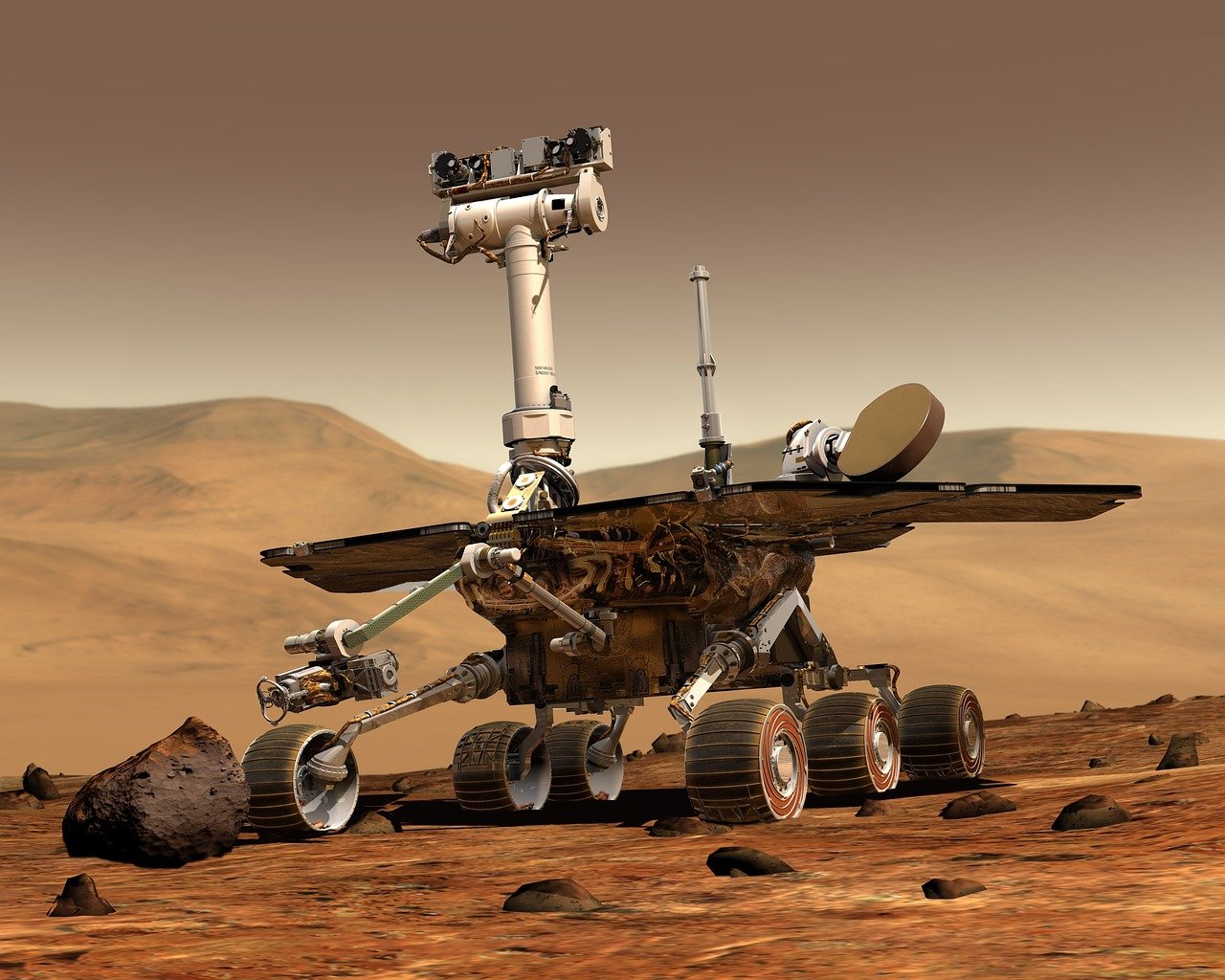
Space exploration and synthetic biology have converged at a critical turning point. While the Perseverance rover unravels the watery history of the Red Planet, scientists on Earth have discovered an organism that defies the known limits of thermophilia, suggesting that life could thrive in conditions far more hostile than previously imagined.
Understanding Astrobiology
For years, the search for life focused on the "habitable zone"—regions around a star where temperatures allow liquid water to exist. However, the discovery of Incendiamoeba cascadensis and the evidence of acidic fluids on Mars shift the focus toward extreme environments. These conditions, once thought uninhabitable, may actually be the primary engines of biological evolution in the cosmos.
Mars: A Complex Aquatic Past
Analysis of the Margin Unit in the Jezero Crater has revealed that Mars did not experience a single water event, but rather an evolutionary sequence of three distinct phases. According to a study published in Communications Earth & Environment by Candice Bedford, the sequence would have been:
| Phase | Chemical Signature | Environment Type |
|---|---|---|
| First | Carbonates | CO2-rich waters |
| Second | Silica | Acidic fluids |
| Third | Calcium Sulfate & Fluorite | Hydrothermal & Volcanic activity |
This finding is disruptive because it identifies igneous rocks where sedimentary ones were expected, suggesting a geologically active environment that could have served as the ideal primordial soup for ancient microorganisms.
Species File: Incendiamoeba cascadensis
Lassen Volcanic National Park, California
Reproduction at 63°C / Survival up to 70°C
Positively charged surface proteins and an expanded genome.
Beyond Our System: Beta Pictoris b
In the realm of astronomy, the Harvard & Smithsonian Center for Astrophysics has achieved a milestone using the MeerKAT radio telescope network. Natural radio signals (auroras) have been detected on the exoplanet Beta Pictoris b.
This discovery confirms a magnetic field thousands of times stronger than Earth's and an accelerated rotation of only 8 to 9 hours. This marks the first direct measurement of a magnetic field on an exoplanet, which is fundamental for understanding atmospheric protection outside our solar system.
Future Perspectives
The analysis of these samples upon the return of the Perseverance rover could confirm the existence of ancient biomarkers. Similarly, studying the proteins of I. cascadensis might allow the development of new heat-resistant industrial enzymes, while the detection of magnetospheres in exoplanets would likely help filter the most suitable candidates in the search for intelligent life over the next decade.