


26/06/2026 21:51 - Internacionales
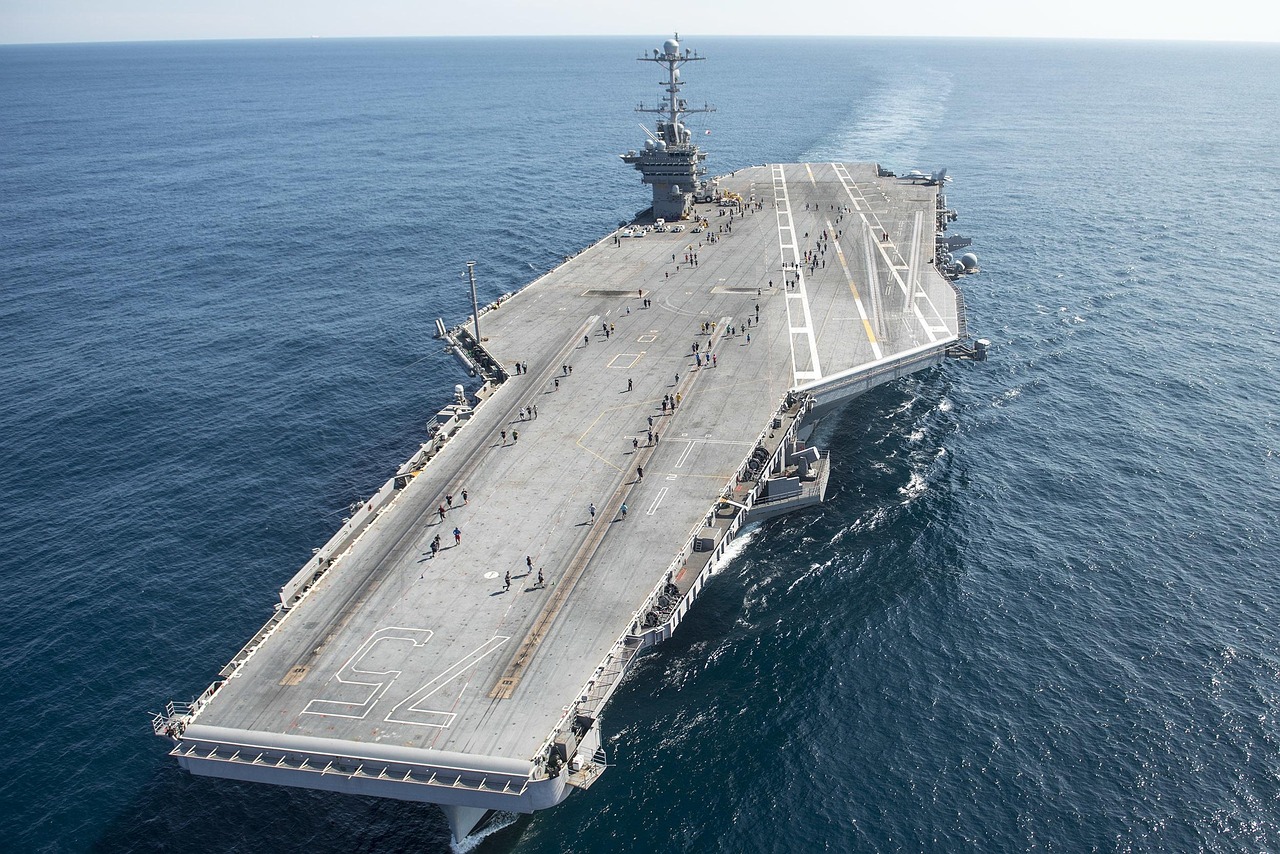
US military aircraft attacked on Friday Iranian missile and drone depots, as well as coastal radar stations near the strategic Strait of Hormuz, according to the US Central Command (CENTCOM). The military response came after Iran struck the Singapore-flagged cargo vessel M/V Ever Lovely with a one-way attack drone while it transited the strait's exit in waters near the coast of Oman.
The incident occurred 7.5 nautical miles (14 kilometers) southeast of Dahit, a locality in the Sultanate of Oman, and marked the first recorded attack in the strait since the memorandum of understanding between Washington and Tehran was signed to end hostilities. President Donald Trump described the act on his Truth social network as a "reckless violation" of the ceasefire agreement, detailing that Iran launched at least four drones against vessels: one struck the cargo ship's upper deck, while US forces shot down the other three.
The Strait of Hormuz is a narrow waterway between the Persian Gulf and the Gulf of Oman, bordered by Iran to the north and Oman and the United Arab Emirates to the south. At its narrowest point, it is only about 21 miles (33 kilometers) wide. Despite its small size, this passage is critically important because approximately 20% of the world's crude oil supply flows through it daily. Any disruption here can significantly impact global energy prices and trade routes.
The vessel, operated by Taiwanese company Evergreen, sustained limited damage to the bridge windows. The company confirmed that the crew, ship, and cargo are safe, and the cargo vessel continued its route toward the Indian Ocean. Trump later stated that Iran "still has some capacity" militarily despite months of conflict.
The Islamic Revolutionary Guard Corps declared it attacked US military positions in the region as retaliation, although CENTCOM has not confirmed those impacts. Iran insists vessels will only receive safe passage if they use routes authorized by Tehran. The International Maritime Organization has proposed two alternative routes: the northern route through Iranian waters with prior authorization, and the southern route through Omani waters with US support.
The memorandum of understanding, signed after months of conflict, included lifting the US blockade on Iranian ports and a 60-day suspension of sanctions on oil sales. However, tensions persist over disagreements about whether Iran can charge fees to vessels. Vice President J.D. Vance, a key negotiator of the agreement, warned: "Violence will be met with violence".
| Metric | Value |
|---|---|
| Vessels evacuated | 115 ships |
| Seafarers relocated | 2,500 sailors |
| Global oil passing through strait | ~20% |
| Drones launched by Iran | 4 (1 hit, 3 intercepted) |
| Conflict start date | February 2026 |
Sources: CNN en Español, Infobae, El País.

Alfredo S. Quiroga
