


03/07/2026 22:29 - Actualidad
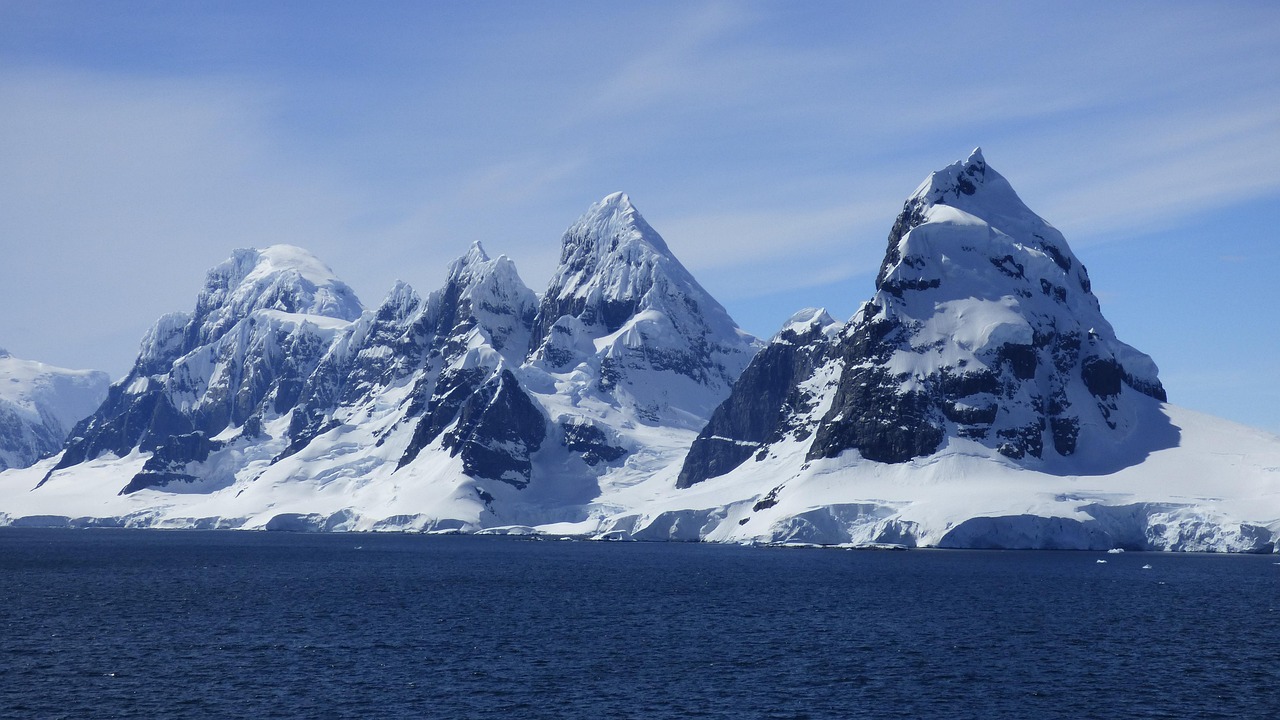
Science always gives us fascinating answers about our planet, and recently, in July 2026, a team of researchers managed to solve one of the greatest climate enigmas in history: why Antarctica froze millions of years before the Arctic.
According to various media outlets such as Infobae, Clarín, and El Confidencial, the study sheds light on how Earth's internal dynamics shaped the global climate in a way that was not fully understood until now.
The study suggests that the origin of this temporal difference in the freezing of the poles lies not only in the atmosphere but beneath our feet. Scientists found evidence of 'waves' coming from inside the Earth. In geological terms, this refers to the convection currents of the Earth's mantle and the movements of tectonic plates that reconfigured the planet's surface.
These deep movements caused Antarctica to become thermally isolated. By separating from South America and Australia, the Drake Passage (the body of water between South America's Cape Horn and Antarctica's South Shetland Islands) opened up. This allowed the formation of the Antarctic Circumpolar Current. This gigantic ocean current flows eastward around Antarctica without any continental obstacles, preventing warm equatorial waters from reaching the South Pole. As a result, the southern continent turned into a massive ice sheet about 34 million years ago, during the Eocene-Oligocene transition.
Meanwhile, the Arctic, being surrounded by continental masses that allowed the influx of warm currents and receiving greater influence from orbital and atmospheric variations in the Northern Hemisphere, took much longer to freeze. The formation of its permanent sea ice cover is estimated to have occurred only between 3 and 5 million years ago.
A fascinating fact revealed by El Confidencial is that these same tectonic processes that isolated Antarctica were also linked to the creation of 'diamond volcanoes'. This refers to kimberlite eruptions, which are the primary natural sources of diamonds on Earth. They are formed at extreme depths and brought to the surface by these internal thermal waves.
Understanding these past processes is crucial for projecting the future. The study not only resolves a historical question but also helps climatologists refine models on how changes in ocean currents and tectonics can impact global temperatures. Today, global warming threatens the ice at both poles, but knowing how they formed gives us the tools to better understand their fragility and the importance of protecting them.
This discovery demonstrates that Earth is an incredibly interconnected system, where the deep movement of the mantle can determine whether a continent becomes a tropical paradise or an icy wasteland. A giant leap in understanding our planetary home!

Alfredo S. Quiroga
