LATEST
First Atmosphere Discovered on an Earth-Like Planet Blue Dollar Hits 9-Month High Amidst Official Stability in Argentina Hope Amidst the Rubble: Venezuela Advances in Reconstruction After Double Earthquake Heavy Snowfall Suspends Classes in Mendoza, Argentina: Affected Areas Salta and Jujuy Overcome Worst Zonda Wind in 30 Years: Fires Controlled Justice Revokes Dismissal of La Matanza Mayor Espinoza, Orders Trial Argentina Shifts Back to Politics Post-World Cup: Urgent Reforms and the Canceled Holiday El Gobierno retoma la agenda política tras el Mundial: reformas, 2027 y el "feriado que no fue" The Mystery of the Colegiales Boa: A Marketing Stunt That Went Out of Control Labor Reform: Government Eases Union Dues Calculation and Unblocks Wage Talks First Atmosphere Discovered on an Earth-Like Planet Blue Dollar Hits 9-Month High Amidst Official Stability in Argentina Hope Amidst the Rubble: Venezuela Advances in Reconstruction After Double Earthquake Heavy Snowfall Suspends Classes in Mendoza, Argentina: Affected Areas Salta and Jujuy Overcome Worst Zonda Wind in 30 Years: Fires Controlled Justice Revokes Dismissal of La Matanza Mayor Espinoza, Orders Trial Argentina Shifts Back to Politics Post-World Cup: Urgent Reforms and the Canceled Holiday El Gobierno retoma la agenda política tras el Mundial: reformas, 2027 y el "feriado que no fue" The Mystery of the Colegiales Boa: A Marketing Stunt That Went Out of Control Labor Reform: Government Eases Union Dues Calculation and Unblocks Wage Talks
Español English 中文 Português Français Italiano Deutsch العربية Русский اردو

International Moon Day: Why We Celebrate Every July 20 and the Mysteries It Still Holds

20/07/2026 19:55 - Actualidad
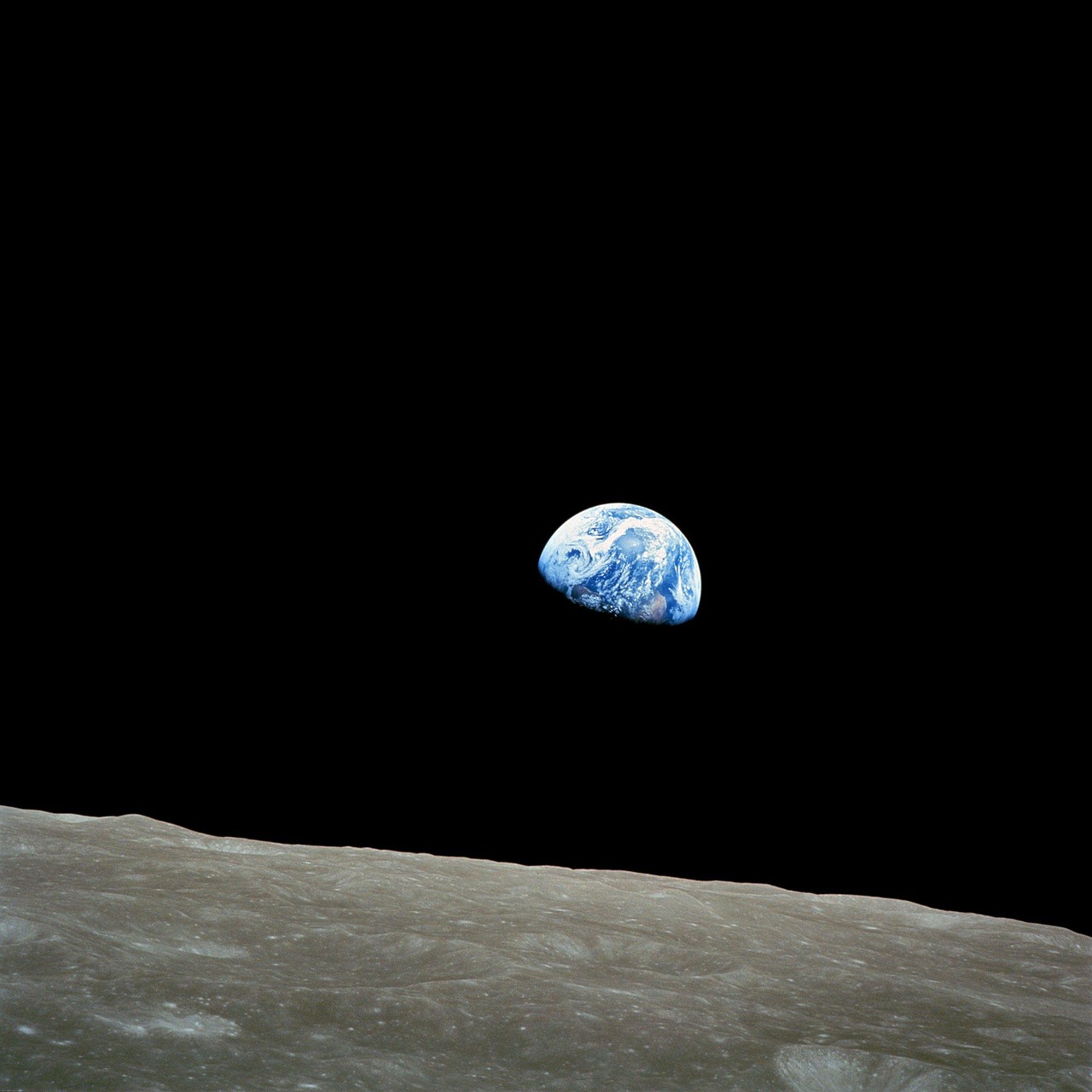
One Small Step That Changed Humanity

According to various sources, every July 20 the world celebrates International Moon Day, a date established by the United Nations General Assembly in 2021 through Resolution 76/76 on 'International Cooperation in the Peaceful Uses of Outer Space.'

The date was not chosen at random: it commemorates the historic milestone of July 20, 1969, when astronauts Neil Armstrong and Buzz Aldrin, part of the Apollo 11 mission, became the first human beings to walk on the lunar surface, while Michael Collins remained in orbit. As recalled by outlets like Infobae, Armstrong uttered the immortal phrase: 'That's one small step for man, one giant leap for mankind.'

The Scientific Legacy of Apollo 11

The Moon landing was not only a geopolitical triumph but a turning point for science. The Apollo missions brought back 382 kilograms of rocks and lunar regolith (the layer of loose, fragmented material covering solid rock), allowing scientists to date the satellite's age at 4.5 billion years. These findings bolstered the 'giant impact' theory, which suggests the Moon formed after a Mars-sized protoplanet called Theia collided with the early Earth.

Additionally, astronauts left laser retroreflectors on the surface, the longest-running scientific experiment outside Earth. These instruments continue to measure the distance between the two bodies and have confirmed that the Moon is drifting away at a rate of 3.8 centimeters per year.

Technologies We Use Today Thanks to the Moon

  • Integrated circuits (microchips): The Apollo 11 computer was the first to use them extensively.
  • Thermal blankets: Used today in marathons and medical emergencies.
  • Water purification systems: Using silver ions, now applied in pools and drinking water.
  • Kidney dialysis machines: Adapted from NASA's fluid filtration processes.
  • Cell phone cameras: CMOS sensors derive from miniaturization for space cameras.

5 Curious Facts You May Not Have Known

As detailed by Clarín, one of Argentina's major newspapers, the Moon holds fascinating secrets:

  • It is the fifth largest satellite in the solar system, with a radius of 1,738 kilometers.
  • It is 400 times smaller than the Sun but 400 times closer to Earth, which allows for total solar eclipses.
  • It has a synchronous rotation of 27.3 days, meaning it always shows the same face to Earth.
  • It has water distributed across its surface, released by meteoroid impacts, not just frozen at the poles.
  • It experiences moonquakes that can last up to half an hour due to the cooling of its interior and Earth's gravitational pull.

What the Moon Looks Like Today and the Future of Exploration

For this July 20, 2026, astronomical platforms indicate that the satellite is in a waxing phase, with 38.9% of its disk illuminated and an age of 6.33 days in its cycle. The first quarter will arrive on July 21 and the full moon on July 29.

According to specialized sources like El Eco, space exploration is going through a moment of intense international competition. While NASA advances its Artemis program, China and Russia are planning lunar bases for the next decade, and the private sector has joined the race with figures like Jeff Bezos. The focus is on the lunar south pole, a key region that could harbor water ice, an essential resource for sustaining future human missions in space.

An Argentine Curiosity: This day also coincides in Argentina with Friend's Day (Día del Amigo), a popular celebration proposed by Argentine dentist Enrique Ernesto Febraro, who was inspired precisely by the Moon landing as a symbol of global unity. Friend's Day is one of the most beloved informal holidays in Argentina and several Latin American countries, where friends gather for dinner and drinks to celebrate their bonds. According to Diario La Opinión, Febraro saw the Moon landing as proof that humanity could achieve the impossible when working together, and he chose July 20 as a day to honor friendship as a reflection of that same spirit of unity.
Today's News
Alfredo's Column Alfredo S. Quiroga

Alfredo S. Quiroga
