18/06/2026 12:16 - Internacionales
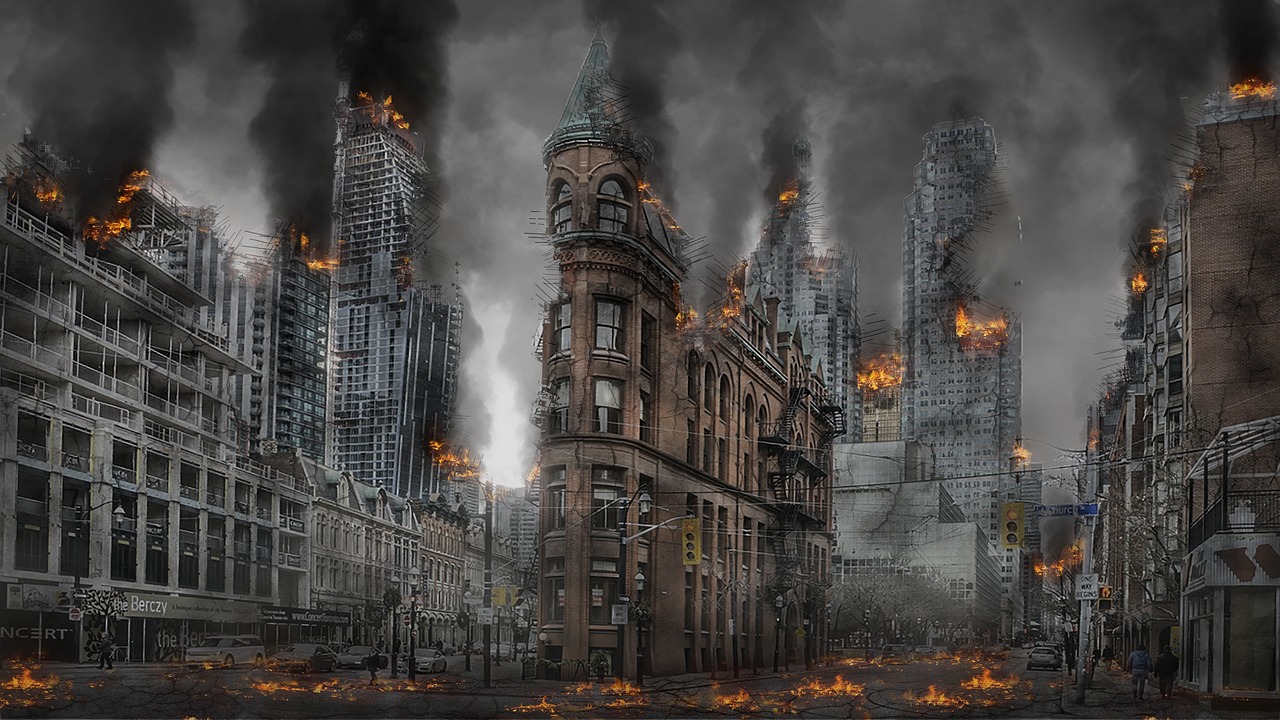
Una refinería petrolera en llamas de noche con columnas de humo negro elevándose hacia el cielo mientras se ven drones y destellos de explosiones antiaéreas en Moscú
Ukrainian President Volodymyr Zelensky issued a stark warning on June 18, 2026, following a massive drone assault that struck Moscow. "If Ukraine burns, Moscow will burn too," he declared in an audio message to the press, directly addressing the relentless Russian bombardments of Ukrainian territory.
The Ukrainian offensive, described as the largest attack on Moscow in at least two years according to the Russian state agency TASS, occurred while Russian President Vladimir Putin was meeting with Southeast Asian leaders in the city of Kazan, approximately 700 km east of the Russian capital.
Zelensky described the attack as "absolutely justified" and directly held President Putin responsible: "The most important thing is that the Russian people are beginning to feel that it is one man, Putin, who is waging this war, while ordinary people pay the price."
The statement responds to a Russian bombing that severely damaged the Dormition Cathedral at the Kyiv Pechersk Lavra (Monastery of the Caves), a UNESCO World Heritage Site founded in 1051 and considered one of the most important Orthodox Christian monasteries in Eastern Europe—an attack that sparked international outrage.
The Ukrainian leader emphasized that "we do not want this war and we have never wanted it," but made clear his position to respond in kind to Russian aggression.
The attack occurred one day after the conclusion of the G7 Summit in Évian, France, where leaders agreed to increase pressure on Russia to end the war. Zelensky is currently in Brussels seeking additional military support and advancing Ukraine's European integration.
The escalation of the conflict takes place amid a tense global context, with a recently signed U.S.-Iran agreement that has temporarily reduced oil prices but also has implications for the broader geopolitical landscape.
The Kyiv Pechersk Lavra (also known as the Monastery of the Caves) is one of the oldest and most significant Orthodox Christian sites in Eastern Europe. Founded in 1051, it has been a center of Ukrainian spirituality and culture for nearly a millennium. The complex contains ancient churches, underground cave tunnels where monks lived, and invaluable religious artifacts. Its designation as a UNESCO World Heritage Site means the international community recognizes it as having outstanding universal value to humanity—making any damage to it particularly significant.

Alfredo S. Quiroga