


28/07/2026 10:25 - Entretenimiento
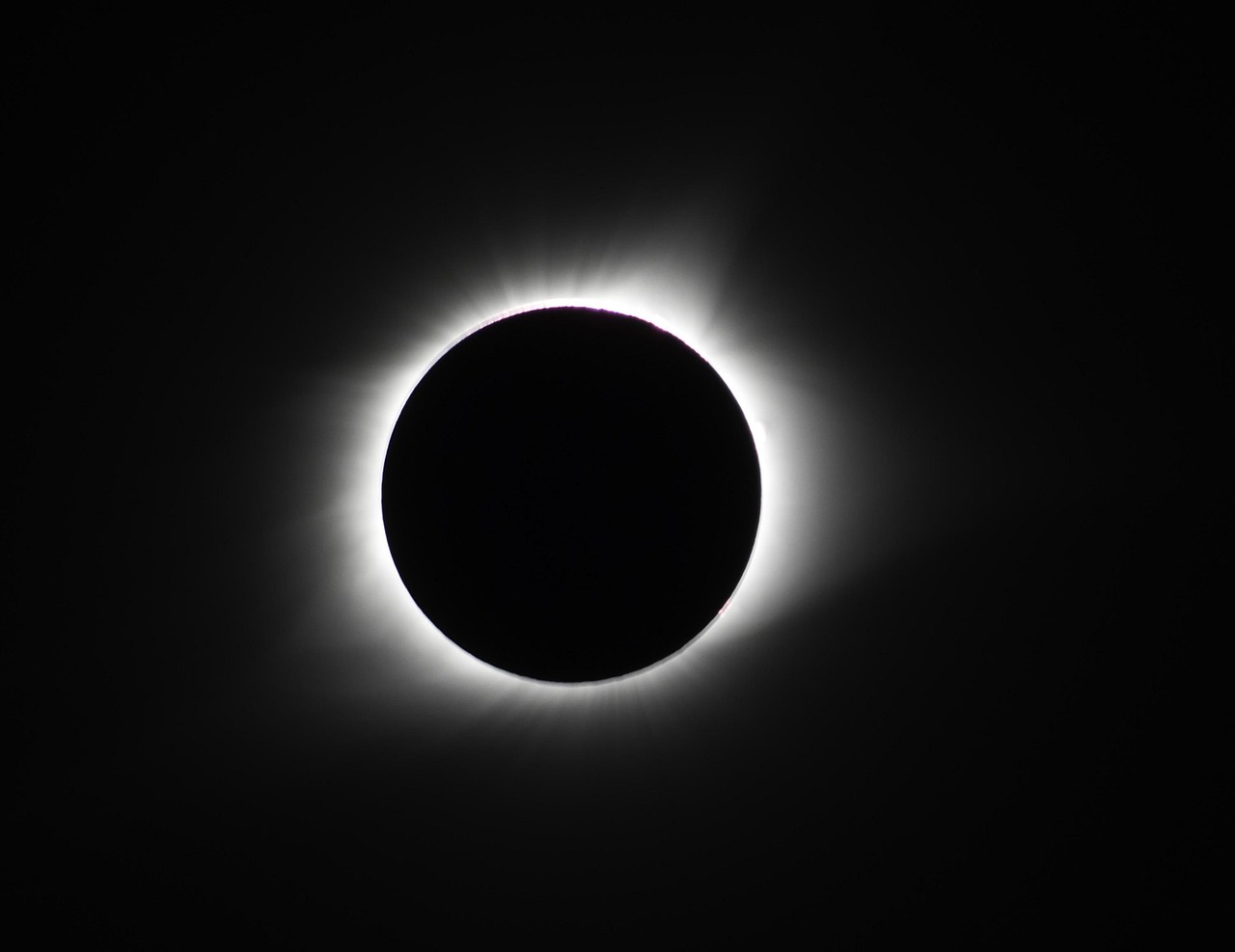
On August 12, 2026, a total solar eclipse will cross the Iberian Peninsula (Spain and Portugal) — a phenomenon not seen there in over a century, coinciding with the peak of the Perseid meteor shower. Throughout history, humanity has gazed at the sky in wonder, and both artists and filmmakers have captured this magic to immortalize it in their works, ranging from fantasy to romantic metaphor and suspense.
The fascination with sudden darkness is nothing new. In art, eclipses appear since antiquity. One of the oldest records is a stone carving at a megalith in Ireland, dating back to around 3340 BC. During the Middle Ages, the Sun and Moon were incorporated into crucifixion scenes to show Christ as ruler of the cosmos, as seen in the Rabbula Gospels (6th century).
With the Renaissance, science and art merged. Florentine painter Taddeo Gaddi, a disciple of Giotto, injured his eye observing eclipses in the 1330s and depicted that experience in his 'Annunciation to the Shepherds'. Later, Raphael included an eclipsed Sun with its corona in 'Isaac and Rebecca Spied upon by Abimelech' (1519), marking the first time the solar corona was painted in an artwork. Years later, American artist Howard Russell Butler showed extraordinary skill in painting eclipses from memory in 1918, 1923, 1925, and 1932, capturing the detailed shape of the corona.
The first solar eclipse ever captured on camera was on May 28, 1900, by British filmmaker John Nevil Maskelyne in the United States. A few years later, in 1907, Georges Méliès released 'The Eclipse: The Courtship of the Sun and Moon', the first fiction film to turn the phenomenon into a humorous, romantic fantasy where the celestial bodies took on human traits.
The most spectacular achievement came from director Richard Fleischer in 'Barabbas' (1961). He decided to film the crucifixion scene during a real total solar eclipse, which occurred on February 15, 1961 in Tuscany, Italy. With no chance for retakes, cinematographer Aldo Tonti captured an unmatched visual intensity for that era.
Astronomical knowledge has also served as a survival tool in fiction. Based on Mark Twain's novel, several adaptations of 'A Connecticut Yankee in King Arthur's Court' show a protagonist using an impending eclipse to convince the medieval court that he possesses magical powers. The most popular version is the 1949 musical comedy starring Bing Crosby, and even Bugs Bunny pulled the clever trick in his 1978 animated version.
In 2006, Mel Gibson used this device in 'Apocalypto', where an eclipse during a sacrificial ceremony is interpreted by Mayan priests as a divine sign that changes the protagonist's fate. Even the famous reporter Tintin, in 'The Temple of the Sun' (1970), threatens to darken the sun before the Incas to save his life and that of his friends.
The eclipse as a metaphor for love reaches its peak in 'Ladyhawke' (1985), where two cursed lovers can only meet in human form during 'the day without night and the night without day'. The 'Twilight: Eclipse' saga (2010) also used it as a central symbol for its love triangle, while Pedro Almodóvar in 'Matador' (1986) used it as a beautiful visual metaphor for a deadly passion.
But darkness also brings fear. In 'Little Shop of Horrors' (1986), a green ray during an eclipse creates a man-eating plant. In 'Pitch Black' (2000), an eclipse on a planet with multiple suns releases lethal creatures, and in Guillermo del Toro's 'Hellboy' (2004), a lunar eclipse is key to opening the gates of hell. In Spain, the film 'Veronica' (2017) sets its horror story during the famous eclipse of July 11, 1991, directly linking it to the mysterious Vallecas case.
Stanley Kubrick gave us one of the most iconic images in '2001: A Space Odyssey' (1968), with the alignment of the Sun, Earth, and Moon to the rhythm of Richard Strauss's 'Also sprach Zarathustra', proving that, more than a century after Méliès, cinema continues to find in eclipses an incomparable source of mystery and fascination.

Alfredo S. Quiroga
