


27/07/2026 19:24 - Tecnologia
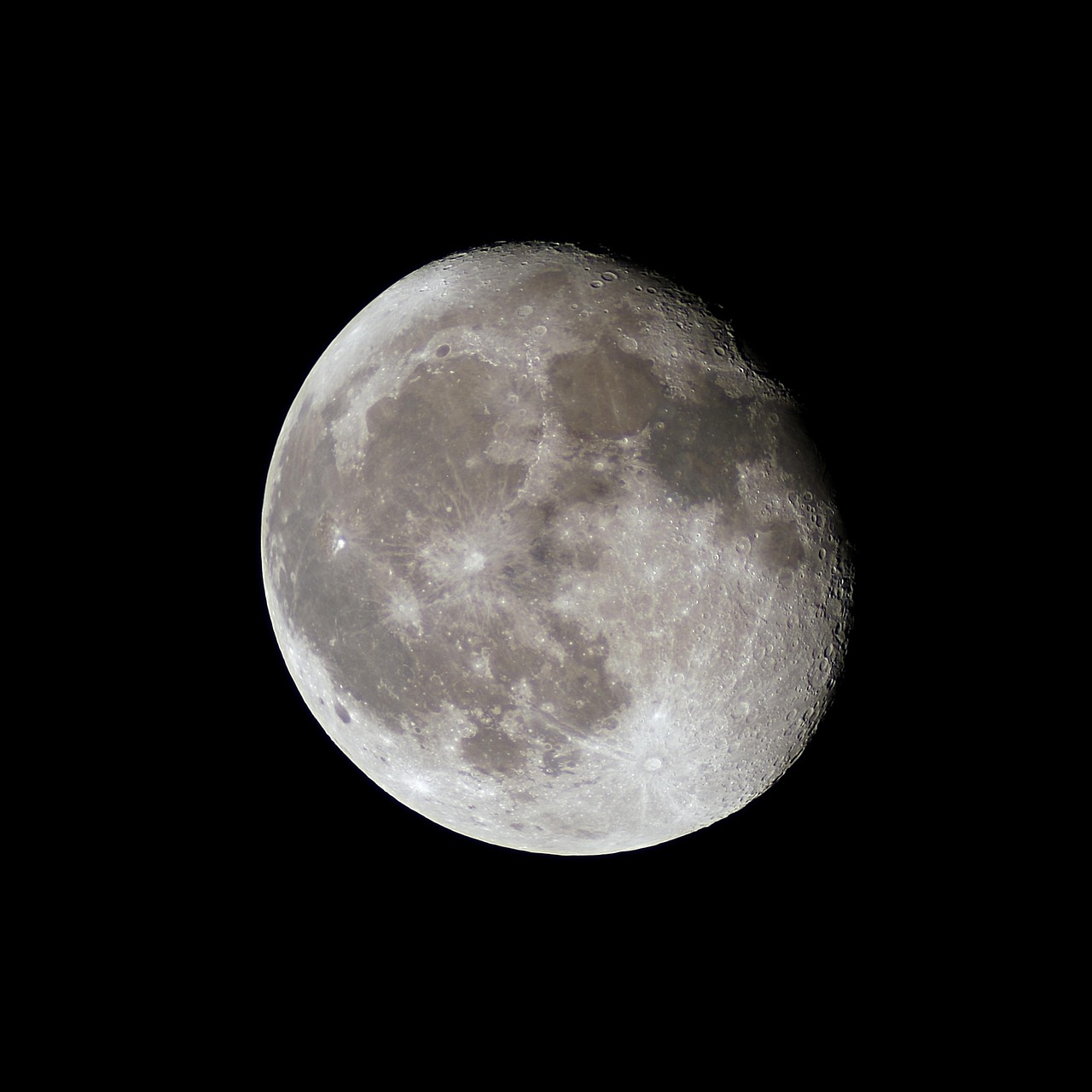
NASA's ESCAPADE mission (Escape and Plasma Acceleration and Dynamics Explorers) continues its voyage to Mars, treating us to spectacular postcards of our home planet. From a distance of 584,600 kilometers from Earth and 186,100 kilometers from the Moon, the twin spacecraft captured both celestial bodies partially illuminated by the Sun, showing only about 8% of their surfaces.
At first glance, Earth and the Moon appear as thin crescents. But the real magic lies in the thermal infrared: Earth's dark side glows due to heat retained by its atmosphere and surface, registering temperatures between 250 and 280 Kelvin (about -23°C to 7°C). In contrast, the Moon's hidden face, lacking an insulating atmosphere, is much colder, around 100 Kelvin (-173°C). These differences are key for calibrating the instruments that will later analyze Mars.
The images were taken with cameras from the Visible and Infrared Observing System, provided by Northern Arizona University. They allow scientists to verify instrument calibration before the real science begins on Mars. The mission's goals include searching for visible auroras on Mars and investigating the thermal properties of its surface and atmosphere.
Launched on November 13, 2025 from Cape Canaveral, Florida, the mission is following a staged trajectory. It is currently in a parking orbit around Earth's Lagrange point 2 (L2), a stable point about 1.5 million kilometers from Earth. In the fall of 2026, it will use Earth's gravity to slingshot toward Mars.
Mars orbit insertion will occur a few days apart for each spacecraft, with each firing its engines for about 11 minutes to slow down. Both will adjust their trajectories to reach smaller science orbits, a process that must be completed by the end of 2027.
Only by mid-2028 will the spacecraft be ready to begin collecting data in two scientific campaigns. Rob Lillis, principal investigator at the University of California, Berkeley, expressed excitement about the progress of the instruments that will search for Martian auroras and assess the thermal environment of the Red Planet.
Source: NASA / UC Berkeley / Northern Arizona University

Alfredo S. Quiroga
