15/06/2026 09:18 - Actualidad
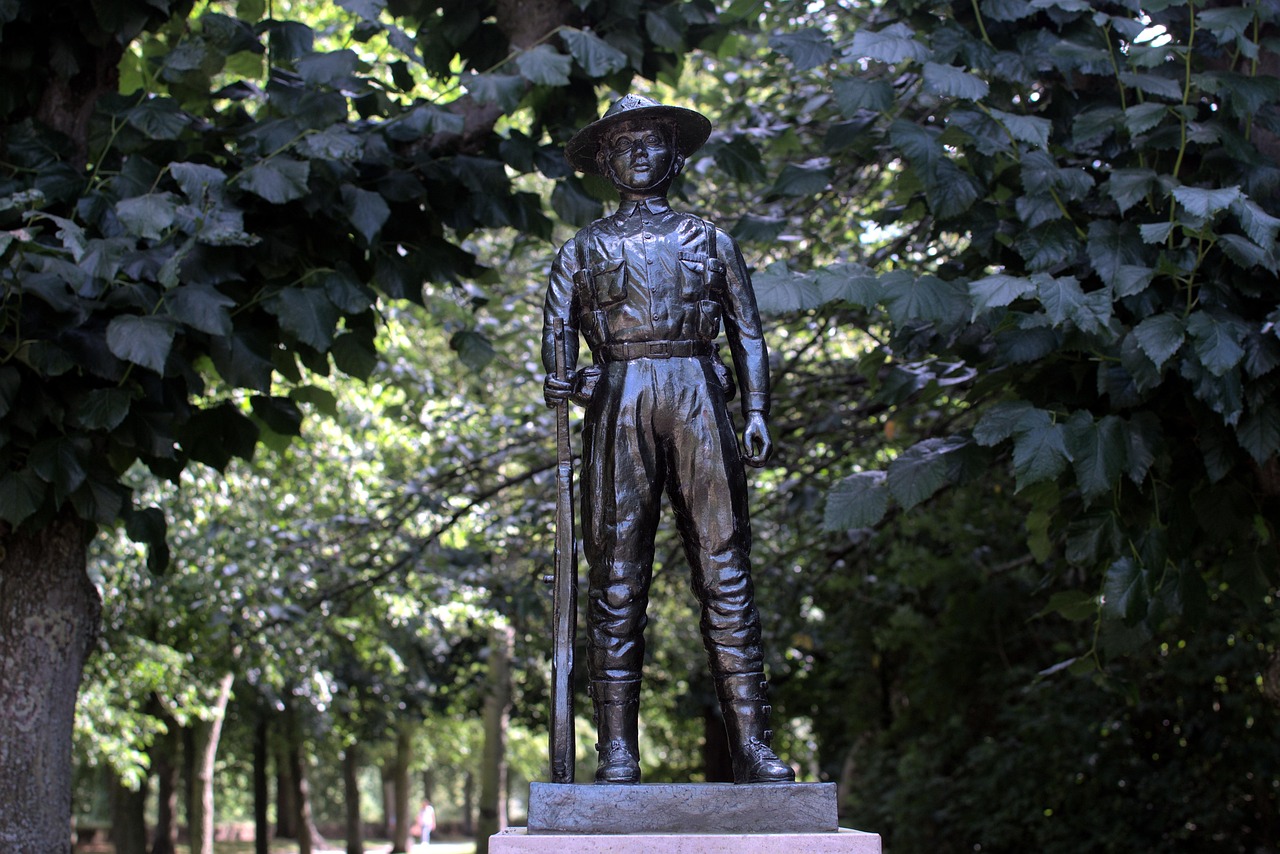
Monumento histórico ecuestre de un líder militar del siglo XIX en una plaza pública, con flores y ofrendas florales en la base, cielo azul con nubes, estilo conmemorativo
This Monday, June 15, 2026, is a national holiday in Argentina, commemorating the death of General Martín Miguel de Güemes. The official date of remembrance is June 17, marking the 205th anniversary of his passing in 1821. He died after ten days of agony following a gunshot wound sustained during an ambush on June 7, 1821.
The Municipality of Salta, a province in northwestern Argentina near the Bolivian border, has organized a special tribute for Tuesday, June 16 at 6:30 PM at the Historic Cabildo Explanada (the town council building from the colonial era). The event will feature the "25 de Mayo" Municipal Band and the Nativos Dance Company, directed by Belén Jaramillo, with free and open admission for all.
| Date: | Tuesday, June 16, 2026 |
| Time: | 6:30 PM - 8:00 PM |
| Location: | Cabildo Explanada, Salta, Argentina |
| Admission: | Free and open to the public |
| Activities: | Live music, traditional dance, malambo (folk dance), and poncho displays |
| Full Name: | Martín Miguel de Güemes |
| Born: | February 8, 1785, Salta, Argentina |
| Died: | June 17, 1821 (age 36) |
| Place of Death: | Quebrada de la Horqueta, Salta |
| Military Unit: | Los Infernales (The Infernal Ones) |
| Rank: | Commander-in-Chief of the Army of Observation |
Güemes was born on February 8, 1785 in Salta, into a wealthy family. His father, Gabriel de Güemes Montero, served as the royal treasurer for the Spanish Crown. At just 14 years old, he enlisted in the Fixed Infantry Regiment, and by 21, he had already distinguished himself defending Buenos Aires during the British invasions of 1806—a conflict where British forces attempted to capture the South American territory.
In 1810, following the May Revolution (Argentina's declaration of independence from Spanish colonial rule), he joined the independence movement. He participated in the Battle of Suipacha on November 7, 1810—the first patriot victory in Upper Peru (modern-day Bolivia)—though curiously, he was not mentioned in the official battle report due to disagreements with his superiors.
His most decisive role began in 1815, when he returned to Salta and organized his own military force: a popular army composed of gauchos (nomadic cattle herders), mestizos (mixed Indigenous-European descent), Indigenous peoples, enslaved individuals, and small rural producers. This force became known as "Los Infernales" (The Infernal Ones) due to their dark clothing and ferocity in battle.
Güemes' militia successfully repelled seven royalist invasions using guerrilla tactics: they would strike suddenly and then disperse into the mountainous terrain, leveraging their intimate knowledge of the land. This strategy, developed in coordination with José de San Martín (Argentina's liberator and national hero), contained Spanish troops in the north while the Army of the Andes advanced toward Chile and Peru.
In May 1815, the Cabildo (colonial-era town council) of Salta named Güemes as Governor of the Intendency of Salta, a vast territory encompassing present-day Salta, Jujuy provinces and Tarija in Bolivia. He was elected by popular assembly, without intervention from Buenos Aires, the nation's capital.
His administration implemented measures that sparked fierce opposition among the wealthy sectors: he suspended land leases, expropriated property from uncooperative Spaniards, and imposed forced loans to sustain the war effort. This internal tension led to his political isolation.
In Buenos Aires, a newspaper announced after his death that there was "one cacique less" (cacique being a derogatory term for Indigenous leaders), and Bernardino Rivadavia (Argentina's first president, serving 1826-1827) wrote that "the abominable Güemes" had died. Yet for the common people, he was considered "a father".
June 7, 1821: Güemes was in the city with only 50 men. He received a gunshot wound to his right hip that lodged in his groin while confronting a group of royalist riflemen.
The attack was orchestrated by José María Valdés, a Valencian Spaniard who knew the hidden trails of the region. A merchant named Mariano Benítez informed him of Güemes' location—marking one of history's most infamous betrayals.
Wounded, he was transported to Quebrada de la Horqueta (a narrow mountain pass), approximately 30 km from the city. There, attended by physician José Redhead (who had previously warned that any wound would be fatal due to his suspected hemophilia), he suffered for ten days.
The Spanish offered medical attention in exchange for his surrender. Güemes rejected the offer with a memorable phrase: "Tell your commander I appreciate his offers without accepting them."
He died on June 17, 1821. His final words were for his wife Carmen Puch: "My Carmen will soon follow me; she will die from my death just as she lived from my life."
Carmen died on April 3, 1822 at age 25, locking herself in her room after the deaths of her husband and son Luis—a tragic end to a love story that became legend.
Güemes' remains rest in the Panteón de las Glorias del Norte (Pantheon of the Northern Glories) in Salta Cathedral since 1918. Beside him lie the remains of his wife Carmen Puch, and other notable figures including Juan Antonio Álvarez de Arenales, Rudecindo Alvarado, Martín Silva de Gurruchaga, José Antonio Fernández Cornejo, and Facundo de Zuviría.
The definitive transfer occurred in commemoration of the centenary of his death. In 1920, a monument was constructed at the exact location where, wounded, he fell from his horse.
María Magdalena Dámasa Güemes, known as "Macacha", was a key figure in her brother's political and military life. She converted her home into a workshop where women of Jujuy (a neighboring province) sewed clothing for soldiers and participated in dangerous espionage missions.
It was Macacha who introduced Güemes to María del Carmen Puch y Velarde, an 18-year-old woman he married on July 15, 1815 in Salta Cathedral. They had three children: Martín (who would become governor), Luis, and Ignacio.
On the night of the attack, Macacha advised her brother to escape through a hidden exit. Güemes ignored her counsel and took the path that cost him his life.
Only in 2010 was the June 17 national holiday established in his honor—nearly two centuries after his death. His figure is considered one of the most marginalized in the official narrative of Independence, despite having defended Argentina's northern frontier alone for years against the Spanish Empire.
Sources: Infobae, Los Andes, Municipality of Salta, Historical Archives of Argentina
Alfredo S. Quiroga
Conspiraciones