


25/06/2026 09:04 - Internacionales
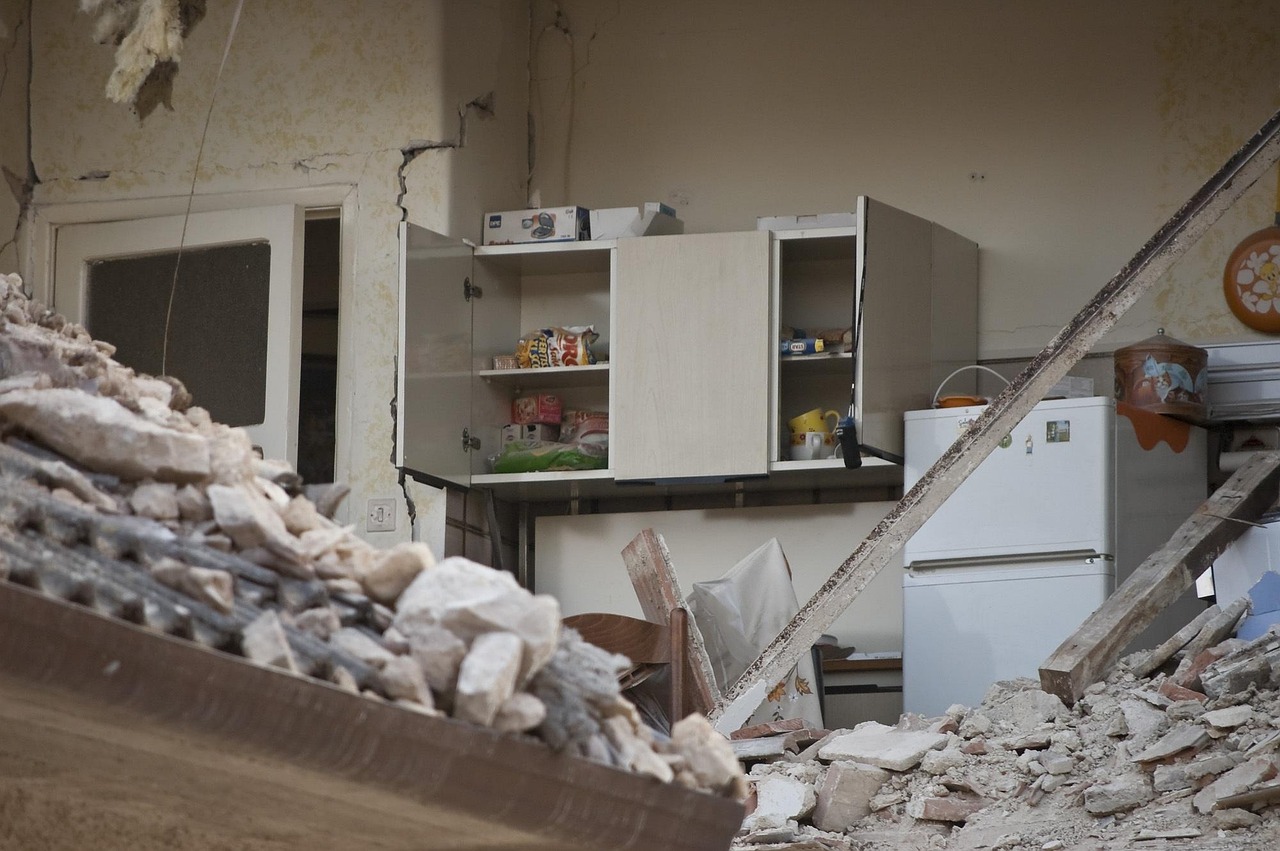
Venezuela is facing a day of mourning and emergency after experiencing the most powerful earthquake recorded in over a century. Two earthquakes of magnitude 7.2 and 7.5 struck the country's central coast on Wednesday, June 24, 2026, with an epicenter near San Felipe, Yaracuy State, approximately 200 km (125 miles) from Caracas, the nation's capital.
The quakes occurred just 39 seconds apart at 6:04 PM local time (10:04 PM GMT), followed by approximately 30 aftershocks. Venezuela's acting president, Delcy Rodríguez, reported on Thursday, June 25, a provisional toll of 164 dead and 971 injured—numbers that could rise as search and rescue operations continue.
The phenomenon recorded in Venezuela is known as a seismic doublet—a rare geological event where two earthquakes of similar magnitude occur within a very short time interval and in the same geographic area. This dramatically amplifies damage because structures already weakened by the first movement have no time to recover before the second impact strikes.
The U.S. Geological Survey (USGS) reported that the strongest tremor (7.5) was caused by shallow slip along a fault near the boundary between the Caribbean and South American tectonic plates. The shallow depth—estimated between 10 and 21 km (6-13 miles)—contributed significantly to the intensity of destruction.
In Caracas—a city of over 2 million people and Venezuela's political and economic hub—buildings collapsed in residential neighborhoods such as Los Palos Grandes and Altamira, both known for their middle and upper-class residential areas. Viral videos captured the moment a structure crumbled in Naguanagua, Carabobo State, while voices can be heard shouting "Make sure no one is underneath!"
The Universitario Stadium in Caracas had to suspend a baseball game—a deeply beloved sport in Venezuela—when the ground began to shake.
A tsunami alert was initially issued for Puerto Rico, the Virgin Islands, Aruba, Curaçao, and Bonaire—all Caribbean territories within reach of potential seismic waves. It was cancelled hours later. However, electricity, gas, and internet services remain interrupted across multiple regions.
The United States government, through Secretary of State Marco Rubio, announced a "significant, rapid, and effective" response with humanitarian aid and logistical support. The United Nations also mobilized: the Office for the Coordination of Humanitarian Affairs (OCHA) will deploy urban search and rescue teams from across the international community.
From Argentina, Foreign Minister Pablo Quirno stated he is in communication with Venezuelan authorities and that, so far, no Argentine citizens have been reported among the affected.
Former president Nicolás Maduro, detained in the United States since January 3, 2026, issued a message from prison calling for "maximum unity, maximum solidarity, and maximum action."
Argentine footballer Lucas Trejo, defender for Club Sport Marítimo de La Guaira (a professional club based near Caracas), is desperately searching for his wife and two children. They were in Playa Grande—one of the hardest-hit coastal areas. The building where they lived collapsed, and he has not yet been able to contact them.
Venezuela is located on the northern coast of South America, bordered by Colombia to the west, Brazil to the south, and Guyana to the east. Its coastline faces the Caribbean Sea. Caracas, the capital, sits in a valley near the coast and is home to millions of residents who live near the boundary of two major tectonic plates.

Alfredo S. Quiroga
