


06/07/2026 16:54 - Tecnologia
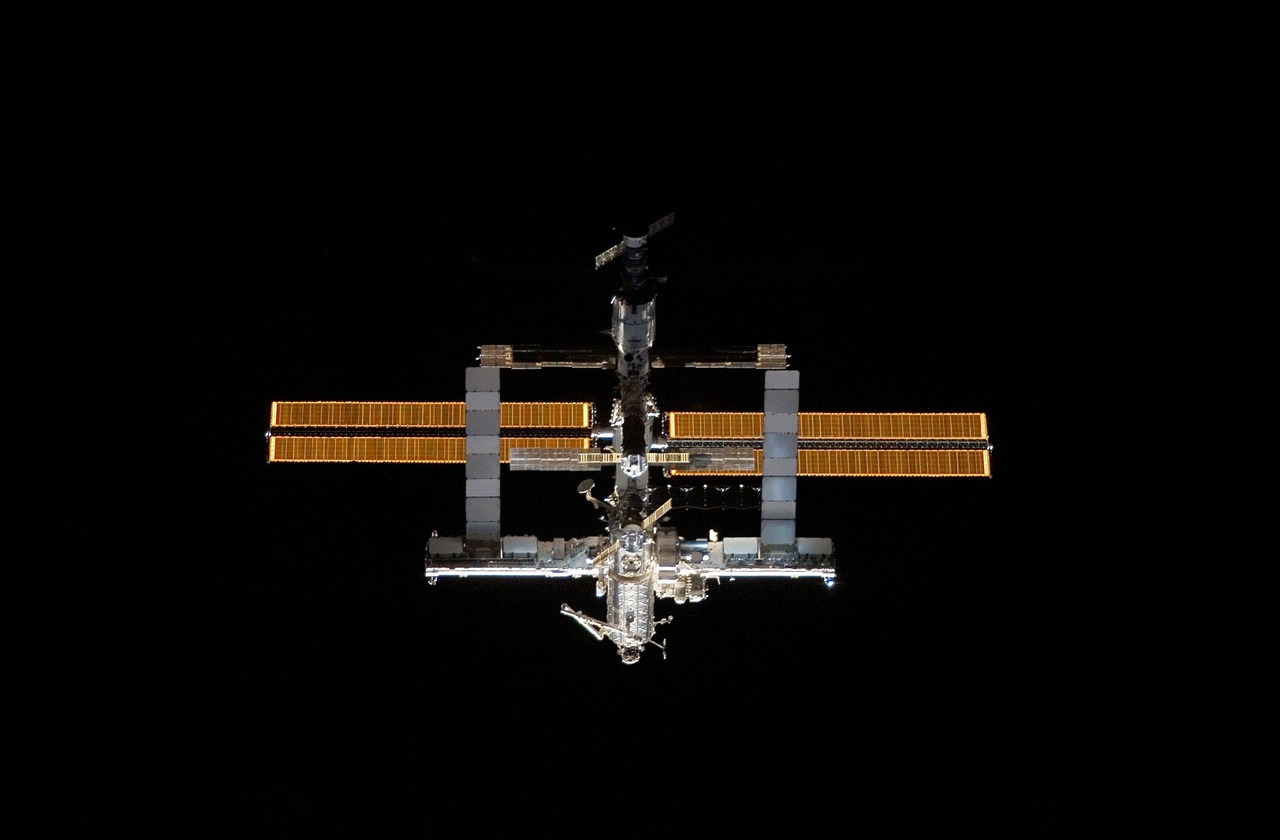
According to reports from the international media outlet Merca2, NASA would have achieved a monumental breakthrough in physics: creating, stabilizing, and observing a Bose-Einstein condensate for several seconds aboard the International Space Station (ISS). This exotic state of matter, which barely lasts microseconds on Earth, requires temperatures one billionth of a degree above absolute zero (-273.15 °C).
The driving force behind this achievement would be the Cold Atom Lab, a compact module installed on the ISS and operated remotely from the Jet Propulsion Laboratory (JPL) in California. The process reportedly begins by heating rubidium or potassium to 400 °C in a vacuum chamber. Then, laser beams extract the kinetic energy, slowing the atoms down almost completely. Finally, a magnetic trap suspends the cloud in space for a final cooling process via evaporation.
On Earth's surface, gravity pulls the atomic cloud downward, causing it to crash into the walls of the trap and lose its quantum coherence almost instantly. However, the microgravity environment of the ISS eliminates this obstacle. Without a dominant force pulling it down, the cloud can float stably for full seconds, allowing scientists to observe how a group of atoms behaves as a single matter wave the size of a grain of sand.
Ethan Elliott, an associate project scientist at JPL, reportedly highlighted that they are conducting Quantum 2.0, manipulating large quantum states to achieve breakthroughs similar to those of the last century with lasers and mobile phones.
Kamal Oudrhiri, the project manager, would point out that applications include gravity sensors to map planets, GPS-free navigation, and atomic clocks to detect gravitational waves from deep space.
The laboratory was launched in 2018 and has received upgrades over the last two years to optimize magnetic fields and metal bands. The routine production of stable condensates would have been consolidated recently in 2026. Despite background noise from the station's vibrations, each batch of data would refine theoretical models. The next generation of the laboratory could test general relativity in a never-before-explored regime.
Source: Merca2

Alfredo S. Quiroga
