08/07/2026 10:56 - Economia
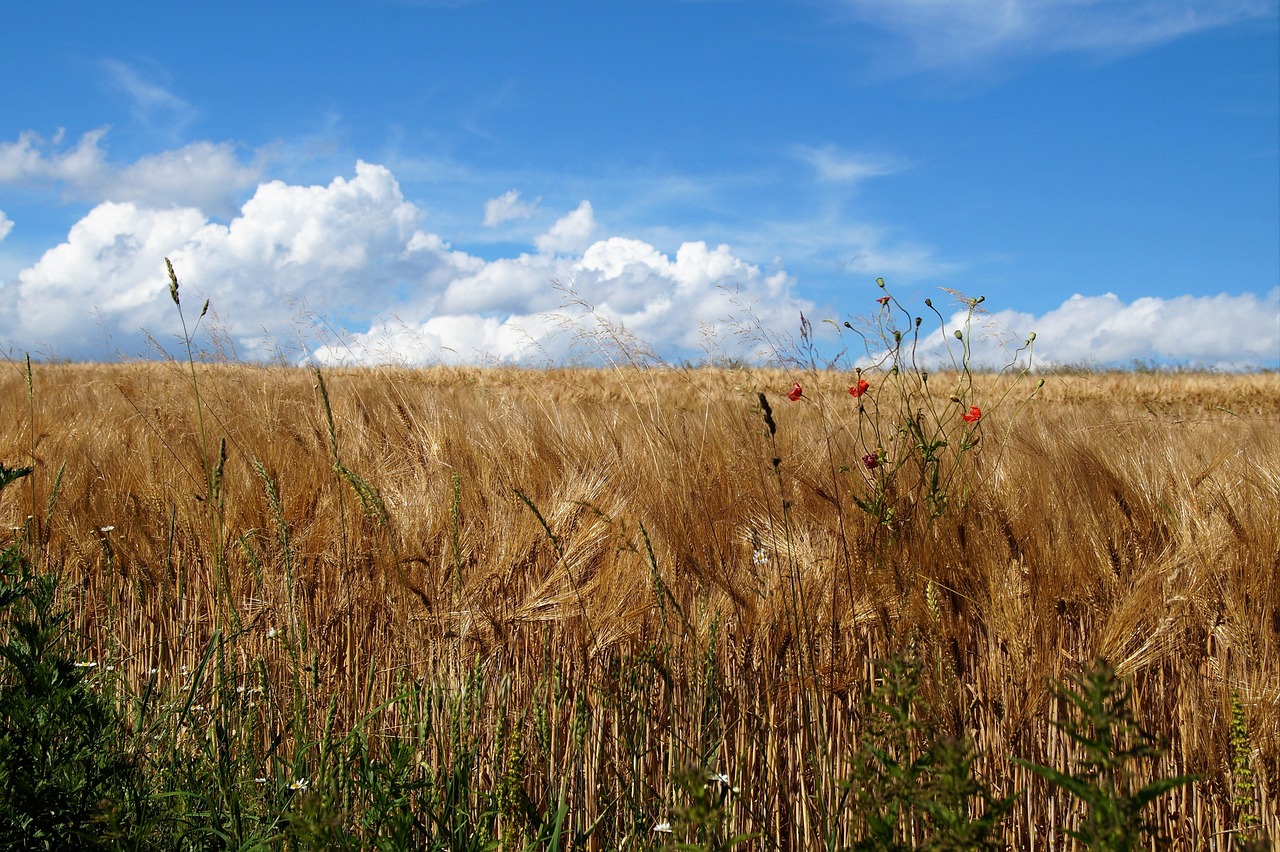
The international grain market could be experiencing a very positive trend shift. According to Dante Romano, a professor and researcher at the Center for Agribusiness and Food at Universidad Austral in Argentina, the market is beginning to incorporate a climate premium once again. Heatwaves in Europe and thermal stress in the Black Sea region are generating uncertainty about global production.
Financial variables would take a back seat, giving prominence to production fundamentals. This occurs in a context where climate models confirm the consolidation of the El Niño phenomenon, an oceanographic-atmospheric event that generates extreme temperatures and altered rainfall toward the end of the year.
Corn farming could receive the most favorable news. The quarterly stocks report by the USDA (United States Department of Agriculture) surprised the market by placing US stocks 2.9 million tons below expectations. This would reflect a very active feed demand, and this information could be reflected in the upcoming WASDE report scheduled for July 9, 2026.
In Europe, France is experiencing the worst heat wave for corn in 26 years, with an estimated production of just 9.5 million tons. In Argentina, the harvest is advancing slowly due to excess moisture, reaching 52.9% of the planted area. However, it maintains an average yield of 81.5 quintals per hectare, sustaining an estimated production of 64 million tons, well above the 49 million tons from the previous season.
In the case of soybeans, the USDA showed a planted area and stocks slightly higher than expected. The condition of US crops dropped to 65% between good and excellent, right in the critical stage for defining yields.
In Argentina, the harvest has practically finished, but commercialization remains delayed: only 25% of the production has been sold, compared to a historical average of 29%. Romano pointed out that getting the stored volume to reach the crushing factories and securing a good price will be one of the main challenges in the coming months.
Wheat remains pressured by the harvest advance in the Northern Hemisphere, which would maintain an abundant global supply. However, the expectation of El Niño's consolidation could alter this scenario if it affects Australian production.
In Argentina, wheat planting has already covered 80.9% of the projected area, favored by good moisture conditions and a decrease in fertilization costs. All planted plots present a condition between normal and excellent, projecting a very promising future for the 2026/27 season.
Source: El Litoral / Campolitoral

Alfredo S. Quiroga