20/07/2026 19:16 - Internacionales
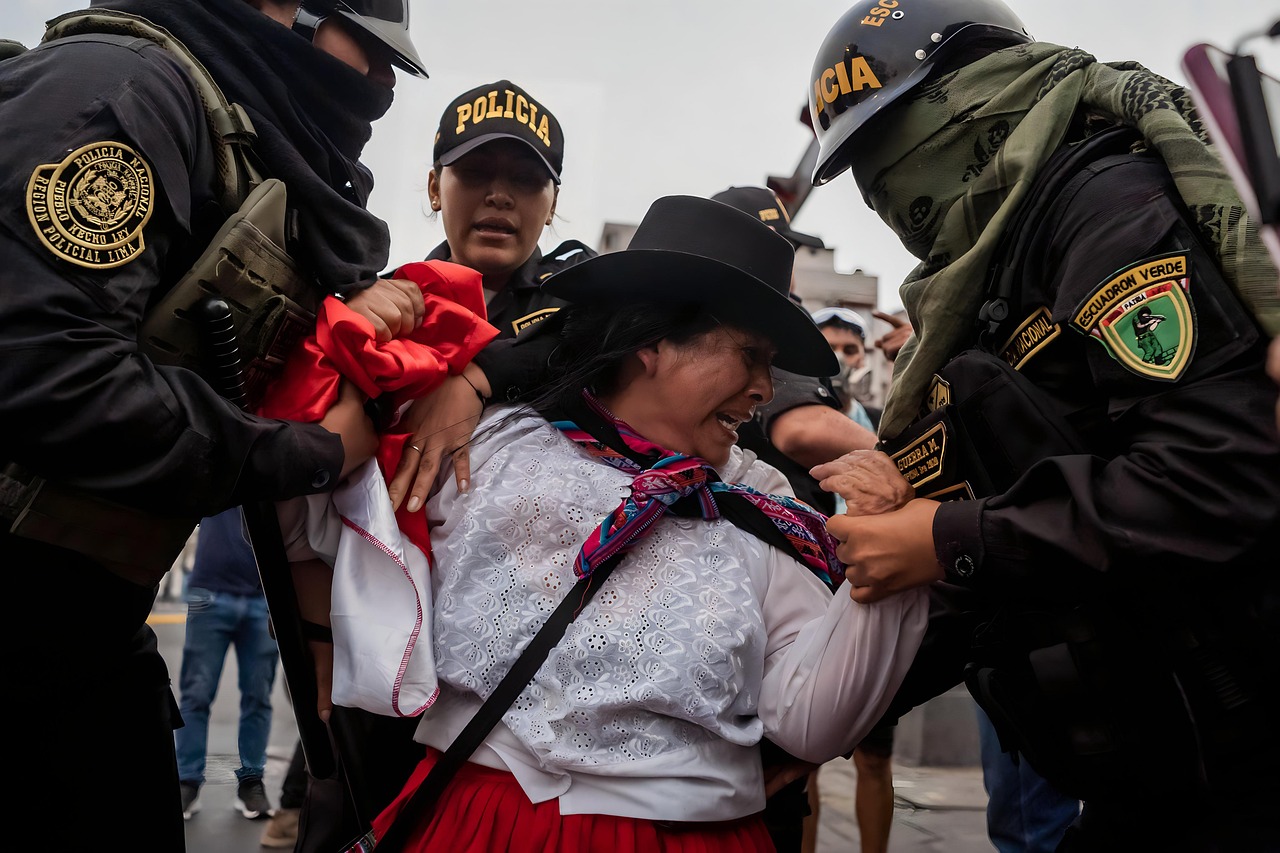
On Sunday, July 19, 2026, just past noon, on Italo Svevo street in the peripheral Pilastro neighborhood of Bologna (a major city in northern Italy), several neighbors called the police to report a man in a state of agitation who had damaged a car parked in the garage of a residential building.
When the officers arrived, they found Abderrahim Fakir, a 43-year-old man of Moroccan origin. He had lived in Italy since he was 7 years old and was awaiting the renewal of his residence permit. According to the police reconstruction, the officers sprayed Fakir with an irritating aerosol (pepper spray) and, with the help of several citizens, kept him lying face down while trying to tie his wrists and ankles with plastic zip ties.
A video recorded by a neighbor from a nearby building—widely shared on social media and set to be a central piece of the investigation—shows two officers on Fakir's back and legs, while a third presses his head against the asphalt. For more than two minutes, Fakir can be heard screaming for help and complaining of pain. Then, his voice stops and his body stops moving. One of the police officers, noticing he is not reacting, lightly taps him on the cheek twice with no response. A paramedic approaches about thirty seconds later, turns his body on its side, but Fakir had already died.
Abderrahim Fakir was a Moroccan businessman who owned a small moving and cleaning company. His lawyer described him as someone perfectly integrated into Italian society. In recent months, he had expressed a growing—and according to his lawyer, unfounded—fear of being expelled from the country despite having his migratory status in order. His family stated that he suffered from asthma, a condition that can cause attacks making breathing difficult, triggered by emotional factors or physical stress. Fakir was a member of the grassroots union SI Cobas.
The Italian public broadcaster Rai News drew a direct parallel with the death of George Floyd in 2020 in the United States, describing a scene that inevitably recalls that episode which triggered massive protests against police violence worldwide.
Fakir's brother-in-law, identified as Mimi, told local press that the officers put two legs on his neck until he stopped breathing and called what happened something you only see in American movies or on TikTok. Fakir's sister, Katia Fakir, directly blamed the officers: If someone is nervous, you have to calm them down, not kill them under the sun.
The night of the same Sunday, around 300 people gathered spontaneously in the Pilastro neighborhood to demand justice in a collective demonstration of grief. The mayor of Bologna, Matteo Lepore (Democratic Party), called a gathering this Monday in the central Piazza del Nettuno (Neptune Square).
The union SI Cobas, to which Fakir was affiliated, proclaimed a 24-hour regional strike in the private sector starting at ten o'clock on Sunday night. In a statement, they said: The police officers, without mercy, killed Abderrahim Fakir, a former affiliate of our union.
The Bologna Prosecutor's Office has opened proceedings for involuntary manslaughter, but neither the two police officers involved in the restraint nor the four paramedics present have been formally charged. Instead, they have been entered into a registry of preliminary actions enabled by the so-called Model 45 bis, a mechanism introduced in May 2026 by the Security Decree of the government of Giorgia Meloni (Italy's current right-wing Prime Minister).
This rule allows delaying the opening of a criminal case against law enforcement members when there is evidence they acted protected by a justifying cause, such as self-defense or fulfillment of duty. This is the first time this instrument, dubbed a penal shield for the police by its detractors, has been applied in Italy. The autopsy, ordered by the prosecution, must determine the exact cause of Fakir's death.
Political reactions have followed a predictable division. Democratic Party Senator Sandra Zampa demanded appearances from the Minister of the Interior, Matteo Piantedosi. Senator from the Greens and Left Alliance, Ilaria Cucchi, announced she is preparing a parliamentary question.
From the ruling coalition, the League (a right-wing populist party) asked not to issue pre-judgment condemnations until analyzing the footage from the officers' body cameras. Deputy from Brothers of Italy Galeazzo Bignami, the majority party in the coalition government, stated that the officers' intervention was carried out with professionalism.
The Moroccan Ambassador to Italy stated they are closely following the evolution of the case and trust the Italian judicial system, according to media outlet Agencia Nova.
Fakir's death occurs in a context of generalized tightening of migration policies in the European Union. On June 17, 2026, the European Parliament definitively approved the new Return Regulation, promoted by an alliance between conservatives and far-right forces. The rule allows home searches of irregular migrants and extends detention periods and entry bans.
In Italy, Giorgia Meloni's government has promoted a policy of border externalization, such as the migrant detention centers built in Albania. Figures of the far-right, such as General Roberto Vannacci—expelled from the Army, elected as an MEP for the League in 2024, and founder of the Futuro Nazionale party in February 2026—have spread speeches that stigmatize migrants and racialized people.
The case of Abderrahim Fakir also bears a chilling resemblance to what happened on June 17, 2025 in Torrejón de Ardoz (Madrid, Spain), where an off-duty municipal police officer choked another man, also named Abderrahim, to death after accusing him of trying to steal his phone.
Family members, neighbors, and anti-racist organizations in Bologna demand that the responsibilities of the intervening officers be clarified and that the case does not go unpunished. The judicial investigation remains open.
Sources: Infobae, El Salto, IzquierdaDiario, Agencia Nova
Alfredo S. Quiroga