


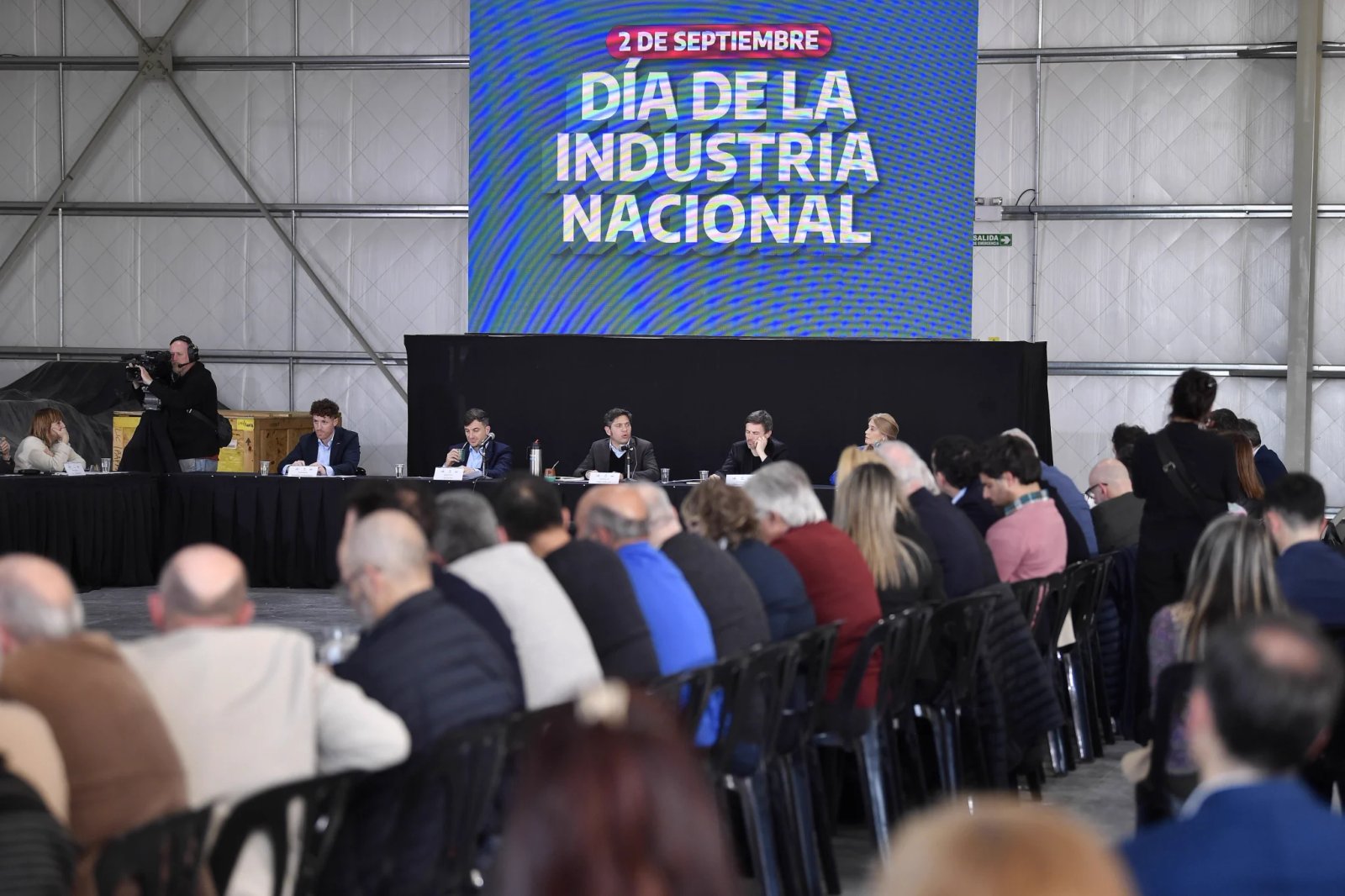
The Accusation and Selective Memory
In recent days, Axel Kicillof, the governor of Buenos Aires province, has once again attacked the national government, claiming it seeks to turn Argentina into a primary-export economy and is pushing a systematic deindustrialization plan. However, the numbers and historical precedents tell a very different story—and the governor himself played a leading role in it.
During his time as Argentina's Economy Minister from 2013 to 2015, under President Cristina Fernández de Kirchner, the country's industry went through one of the most critical periods in its recent history. Far from promoting industrial development, the policies implemented during that administration deepened the sector's decline.
Manufacturing output fell more than 5% in 2014—the worst figure since the 2009 crisis—and industrial employment dropped by over 50,000 jobs.
The Data That Contradicts the Narrative
According to data from INDEC (Argentina's national statistics institute) and the Centro de Estudios para la Producción (CEP), during Kicillof's time at the helm of the Economy Ministry:
- 2014: Industrial production fell 5.2%, with sectors like automotive plunging more than 20%.
- 2015: Industry remained in negative territory, with a cumulative decline of 1.8%.
- Industrial employment lost more than 50,000 jobs between 2013 and 2015.
- Imports of capital goods grew uncontrollably, directly competing with local production.
These figures contrast sharply with the governor's current rhetoric, which presents him as a defender of national industry.
The Context of Policies Implemented
During those years, measures such as the currency exchange controls (cepo al dólar), price controls, and increasing money printing to finance the fiscal deficit were implemented. These policies eroded the competitiveness of local industry, which found itself unable to export or compete with imported goods.
A emblematic case was the automotive sector, which went from producing more than 800,000 vehicles in 2011 to fewer than 600,000 in 2014, with mass layoffs and temporary suspensions at plants across the country.
Key Data from Kicillof's Tenure (2013-2015)
| Indicator | Value |
|---|---|
| Industrial decline in 2014 | -5.2% |
| Automotive sector decline in 2014 | -20% |
| Jobs lost | +50,000 |
| Vehicle production in 2011 | 800,000 |
| Vehicle production in 2014 | 600,000 |
The 'Primarization' of the Economy
Paradoxically, during the Kirchner administration, industry's share of GDP fell from 18% to 15%, while the agricultural export sector gained prominence. This process of economic 'primarization'—which Kicillof now criticizes—deepened during the years he served as minister.
Industrial economists agree that the import restriction policies (the so-called DJAI) did not protect local industry but instead generated uncertainty and a lack of inputs for production, particularly affecting SMEs.
A Narrative That Doesn't Hold Up
Kicillof's accusation against the national government seems to ignore his own legacy at the helm of the economy. While in recent years policies of trade opening and deregulation have been implemented to attract investment, the data from his tenure paints a very different picture from what he now tries to portray.
Argentina's recent economic history shows that deindustrialization is not a new phenomenon nor exclusive to any particular government, but it is true that during Kicillof's management some of the worst industrial indicators in recent decades were recorded.
The Buenos Aires governor should explain why, if he cares so much about national industry, he failed to reverse the sector's decline during his time at the Economy Ministry—and why, on the contrary, the numbers got worse.