


02/07/2026 03:05 - Internacionales
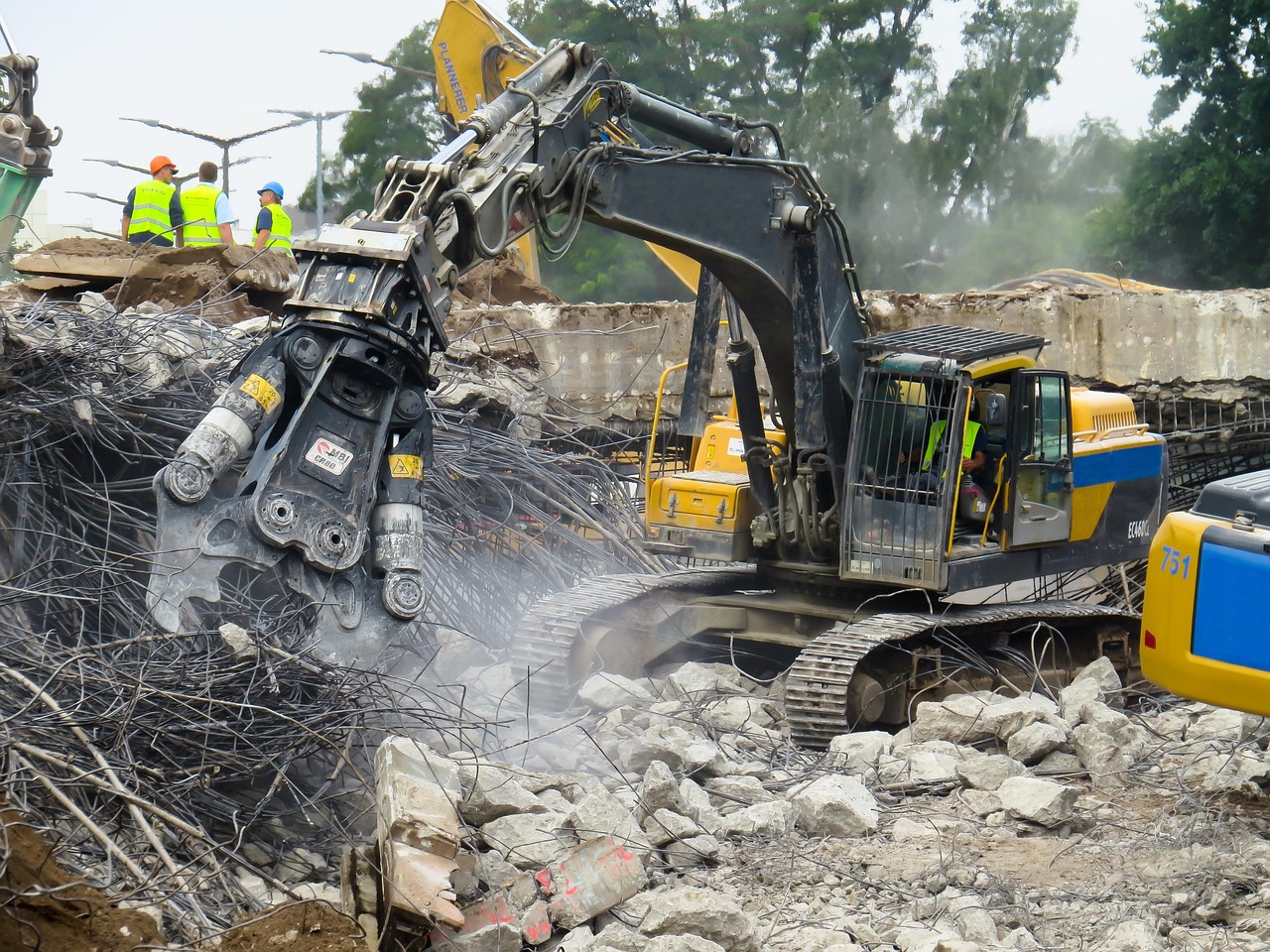
Venezuela is experiencing one of the greatest tragedies in its recent history. One week after the seismic doublet of June 24, 2026, with an epicenter near Morón (approximately 170 kilometers west of Caracas, the capital), the country remains in a state of shock and emergency. The acting president Delcy Rodríguez declared seven days of national mourning starting Wednesday, July 1st, in honor of the thousands of victims.
The official toll rose dramatically: from 1,943 deaths reported on Tuesday, June 30, the figure increased to 2,295 confirmed deaths and 11,267 injured, according to Jorge Rodríguez, president of the National Assembly. International organizations estimate that the number of missing persons could reach between 40,000 and 70,000 people.
International satellites monitored the impact of the seismic doublet. The NISAR satellite from NASA and ISRO (Indian space agency) captured images between June 13 and 25 revealing ground displacements of up to 40 centimeters in the Earth's crust. Maps generated with InSAR (Interferometric Synthetic Aperture Radar) technology show areas where the surface moved in opposite directions: red tones indicate eastward movement, while blue marks westward movement.
The energy released by the earthquakes was detected even at 5,200 kilometers distance, at the Argentinean-German Geodesy Observatory (AGGO) in Berazategui, Argentina, where primary waves took eight and a half minutes to arrive from the epicenter.
According to NASA estimates, approximately 58,870 buildings were damaged or destroyed in the most affected areas, particularly near San Felipe and Yumare. The European Union's Copernicus system also activated its high-resolution optical sensors and Sentinel satellites to map the affected territory.
A seismic doublet is a sequence in which two strong earthquakes occur in the same region within a very short interval, presenting comparable magnitudes. Unlike the typical "main event + aftershocks" sequence, in a doublet, both earthquakes are significant on their own and can cause damage as primary events. In Venezuela's case, the two earthquakes occurred just 39 seconds apart with magnitudes of 7.2 and 7.5 respectively, drastically reducing response capacity and exposing structures to immediate secondary stress.
In the coastal state of La Guaira (approximately 60 km from Caracas), the epicenter of the tragedy, stories repeat building after building. Francisco Pérez, 28, spent a week in front of the rubble of a building where Nancy Rojas, 67, was buried—someone he considered his mother. Through a knocking code (two for "yes," three for "no"), he claims to have received responses from her during the first days, but silence eventually prevailed.
The platform led by opposition leader María Corina Machado registered 40,668 people as "without contact" with their families. There are at least 855 affected buildings, 189 of them with total collapse. The president of the National Assembly, Jorge Rodríguez, mentioned that there could be up to 10,000 deceased.
A concerning phenomenon for rescue teams involves survivors recording themselves pretending to be trapped under rubble to attract rescuers to the exact building where their loved ones are located. The desperation to find their own drives people to unimaginable extremes.
More than 27 countries sent aid with over 3,300 rescuers and 200 search dogs. The United States donated 300 million dollars in humanitarian assistance. The European Union activated the Copernicus system to generate automatic structural damage analysis. Pope Leo XIV donated 100,000 euros. Argentina deployed 64 military personnel from the Federal Special Rescue Brigade (BEFER).
The US Government, in collaboration with Starlink, is working to restore connectivity in the most affected regions through the deployment of satellite internet terminals.
The preliminary United Nations analysis estimates that direct physical damages amount to 6.7 billion dollars, a figure representing approximately 6% of Venezuela's GDP. The range of losses is estimated between 4.7 and 8.7 billion dollars.
Venezuela is located on the boundary between the Caribbean Plate and the South American Plate, a zone of intense seismic activity due to the friction and displacement of these large tectonic blocks. This boundary crosses northern Venezuela from the Colombian border to the central coast, generating constant seismic activity, especially near active fault systems such as Boconó, San Sebastián, and El Pilar. The combination of multiple faults over a densely populated territory, urban growth, and city expansion in vulnerable areas increases the frequency and intensity of earthquakes.
Sources: El Día | La Mañana Neuquén | El País

Alfredo S. Quiroga
